
Big-Box Retail Roofing in Lynn, MA
A big-box retail building in Lynn, MA can depend on uninterrupted receiving, checkout, refrigeration, and customer access while roof work is underway. A ceiling leak over inventory or a damaged roof zone above a sales floor needs a documented boundary before crews begin. We map reported rooms to drains, equipment, seams, and previous repairs, then record what can be confirmed from the roof. That condition log helps the owner decide whether to isolate a repair, test for concealed moisture, or plan a larger project during a lower-volume window.
Peabody’s Northshore Mall is a regional shopping destination with more than 120 specialty stores; Downtown Lynn has a different mix of retail, restaurants, galleries, and events. Both provide local context for traffic and staging, while each store’s roof and loading layout control the work. Compare shopping-center roof planning or grocery roof service with the site-specific needs of a large retail building. A roof inspection can establish the first zone map.
Coordinate big-box roof repairs in Lynn with delivery access, rooftop equipment mapping, leak isolation, drainage checks, and phased work planning.

Receiving and occupancy: coordinate around store activity
Delivery bays, customer doors, stockroom routes, refrigeration equipment, and overnight stocking can each affect roof access. The manager can identify blocked receiving periods, areas that cannot close, and equipment that must remain powered. We record those restrictions with the staging route, lift location, material drop, and areas where interior protection is required. If roof work can be done in sections, the schedule should name the daily boundary and the person who confirms each zone is safe to reopen.
An urgent leak may need response outside normal retail hours. An active store leak can bring a roof response at any hour, holiday included; photograph temporary protection and inspect the nearby assembly before setting permanent work. If water reaches merchandise, electrical equipment, or a refrigerated zone, document the interior location and roof conditions before the evidence changes. We separate any immediate water-control work from a longer repair so the store manager understands what is stable and what still needs a decision.
Rooftop equipment: trace penetrations and service paths
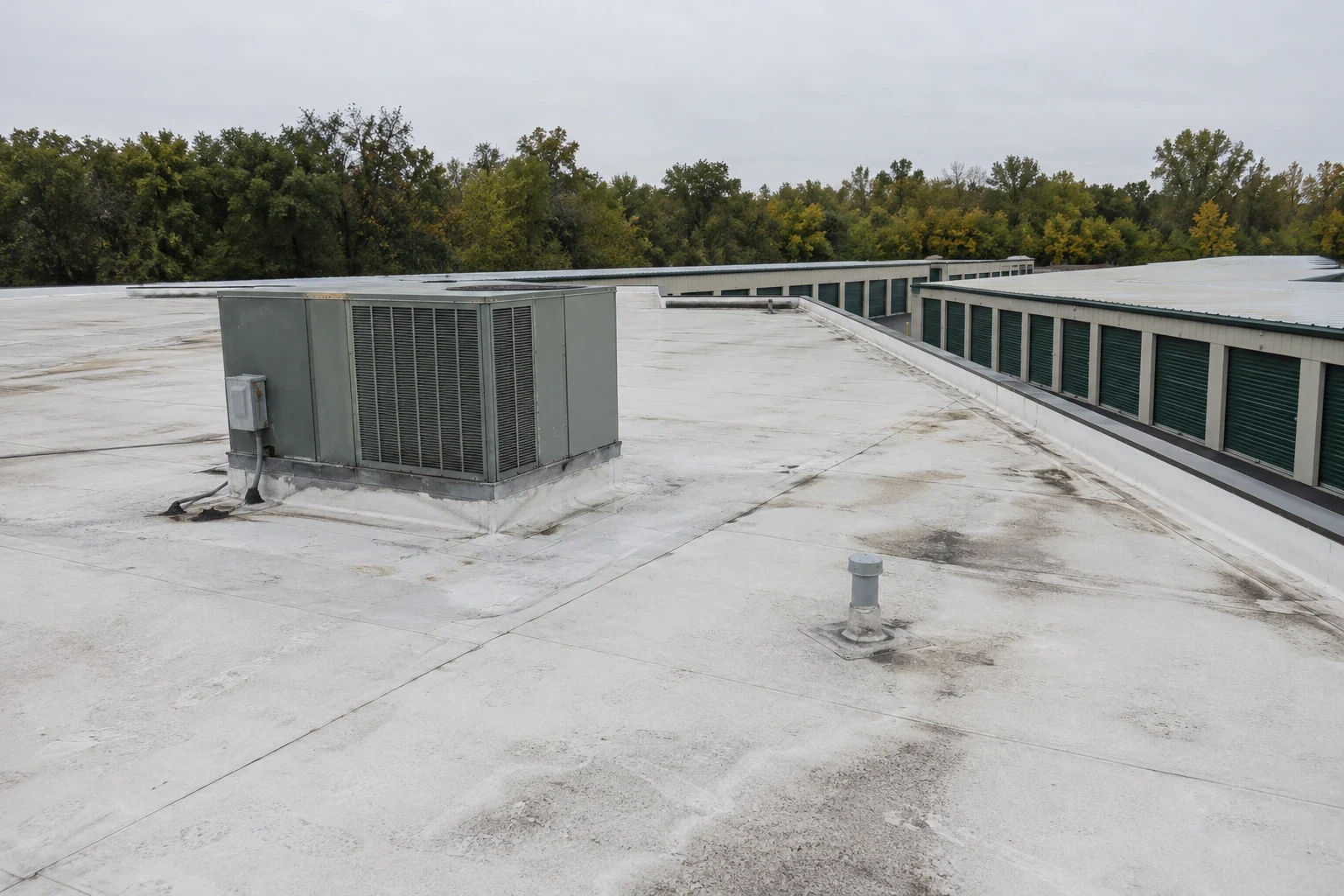
Large retail roofs often carry multiple HVAC units, exhausts, refrigeration lines, lighting, and utility supports, but each building’s equipment count and arrangement must be observed rather than assumed. We mark curbs, conduits, penetrations, service walkways, and areas where later equipment changes may have interrupted flashing. A leak reported below a unit does not by itself prove that the curb is the entry point. Inspect the detail, nearby membrane, and water path, then note whether safe access permits a closer look or test opening.
Service technicians may need continued access during roofing work. The sequence should keep required paths open or identify when equipment must be shut down, protected, or coordinated with another trade. If a curb must be raised or reset as part of replacement, show the new flashing height and the tie-in to insulation. Along the Lynnway Corridor, regional movement and deliveries are part of the broader site context, but the actual receiving route is verified at the property. A curb and support review can define the roofing interface.
Drainage and exposure: keep the water path clear
Nearby Boston Logan records average a 83.2°F July daily high and a 24.3°F January daily low. Those regional readings frame heat and freeze review, while drains, seams, and low zones still need inspection at the store. For a Lynn retail roof, these regional conditions make drains, scuppers, overflow routes, and freeze-thaw transitions useful inspection points. We mark actual low areas, debris, blocked outlets, membrane seams, and any interior reports. If equipment placement or a changed roof height diverts water, show the path before and after the work. A climate record supports scheduling and review questions; it cannot establish that a particular store has ponding or wet insulation.
Hurricane Sandy brought coastal flooding to the Massachusetts shore, and southern New England squalls can combine damaging gusts with hail at least one inch in diameter. Regional storm history warrants a post-event walk, not an assumption about a store. We photograph loose perimeter metal, punctures, impact marks, and displaced flashings where present. A storm-damage assessment can preserve the date and affected zones, and a condition report can compare them with earlier observations.
Repair planning: protect stock while limiting the scope
A localized repair can address a puncture, open seam, drain detail, or curb flashing when surrounding materials remain sound. If moisture appears in several zones or repairs keep recurring, the owner may need moisture mapping, test openings, or a broader assembly review. A recover is possible only when the existing layers meet stability, moisture, compatibility, and project requirements. Replacement introduces more tear-off and temporary exposure but allows closer review of concealed conditions. The written comparison should separate confirmed defects from assumptions.
Cost and schedule drivers include roof access, lift or crane needs, interior protection, delivery hours, equipment coordination, debris removal, phasing, and the amount of wet or unstable material discovered after opening. During design, confirm which Massachusetts building and energy-code provisions apply to the assembly and permit. If the store operates through the work, each phase should define what remains accessible to customers and staff, where materials can stage, and what happens if the weather window closes. A replacement scope should use the same roof-zone map as the repair option.
Handoff: document the store’s roof zones
At closeout, provide the manager with a marked plan, dated photos, repair locations, drain and flashing details, materials installed, and any item deferred to a later phase. Tie a repaired zone to its interior report when that connection is known. If a temporary patch remains, label it as temporary and record the follow-up needed. That handoff helps store teams respond to another leak without relying on a vague location or treating the work as broader than the approved boundary.
Follow-up walks can revisit roof drains, equipment curbs, loading-area edges, and prior repairs at a frequency suited to the building’s condition and maintenance plan. Note any area that was inaccessible during the project. If the next project involves a store remodel or equipment change, the closeout record can show which roofing details need coordination before installation begins. The file should describe completed work and its limits so the next facilities contact can make a clear decision.
Commercial Roofing Questions
How should a big-box store respond to a leak over inventory?
Protect stock and electrical areas, record the room and time, and arrange roof access for a zone-based inspection. We compare the report with drains, penetrations, seams, and prior repairs, then document whether temporary work or a permanent repair is supported.
Can roof repairs be done overnight at a retail store?
A night window may help with customer access, but noise, deliveries, roof conditions, staging, and crew safety still govern the sequence. The work plan should state which zone opens, what stays accessible, and how the area will be protected at shift end.
What information helps plan roof work around deliveries?
Share receiving hours, truck routes, lift locations, tenant or department restrictions, equipment access needs, and the contact who can approve a schedule change. We use those details to plan the work route and daily boundary.
Does a leak near an HVAC unit mean the curb has failed?
Not necessarily. Inspect the curb flashing, nearby seams, equipment service paths, drains, and reported interior location before assigning a cause. A marked photo record distinguishes an observed detail condition from a suspected water path.
When should a retail owner consider replacement instead of repair?
Compare the number and spread of documented conditions, moisture evidence, assembly stability, and recurring work. A test opening can clarify hidden layers before deciding whether a local repair, recover, or larger replacement is appropriate.
Plan big-box roof work
Send the store’s operating hours, receiving limits, leak locations, equipment access needs, and site contact. We will map roof conditions and outline a repair or phased project that accounts for store activity.
Back to Property Types We Roof.