
Storm Damage Roof Repair in Lynn, MA
After severe weather, a Lynn commercial roof needs a property-specific inspection before anyone expands a repair scope. Lynn Harbor supports marine-dependent activity, while Lynnway Park includes warehouse, food-processing, storage, and cold-storage uses. Wind-driven rain, access limits, and operating schedules can matter differently at each facility. We record what the storm changed, what was already present, and what remains concealed before recommending temporary protection or permanent work.
Regional history provides context, not a building diagnosis. Hurricane Sandy brought coastal flooding along the Massachusetts shoreline; Boston recorded a 62 mph gust and Revere Beach a 54 mph sustained wind. Those measurements do not prove storm damage at a Lynn property. We inspect its edge details, seams, penetrations, drains, and interior reports, then tie each finding to a dated photo and roof zone.
Document storm-related roof damage in Lynn with roof-zone photos, temporary dry-in, edge and drainage checks, and a defined repair boundary.
Protect the Opening and Record the First Condition
If water is entering, the first objective is to limit exposure without covering up evidence. We identify the affected roof zone, interior impact, and safe access route, then consider temporary dry-in that can be secured under current weather conditions. Emergency protection is not the permanent repair. The follow-up scope identifies the repair boundary and any area that could not yet be examined.
At a waterfront property, we confirm gate rules, delivery routes, and equipment access before staging materials. At a downtown building, public entrances, tenants, and pedestrian movement may shape the work window. We coordinate with the property contact at Lynn Harbor or in Downtown Lynn without assuming every site has the same exposure or access arrangement.
A rapid roof response can document active water entry and secure a safe work boundary. Once conditions allow, a full roof inspection checks adjoining sections that may not be visible from the opening alone.
Inspect the Perimeter, Seams, and Penetrations
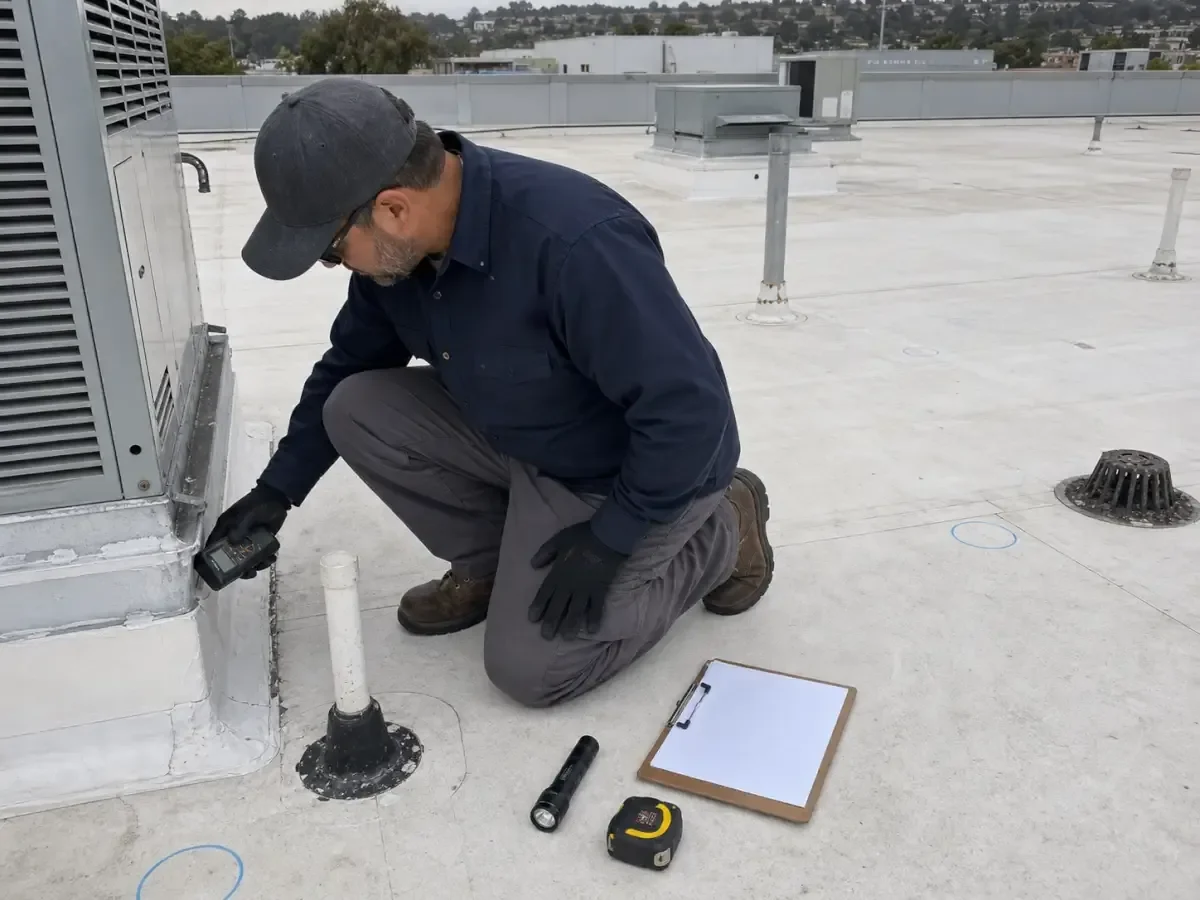
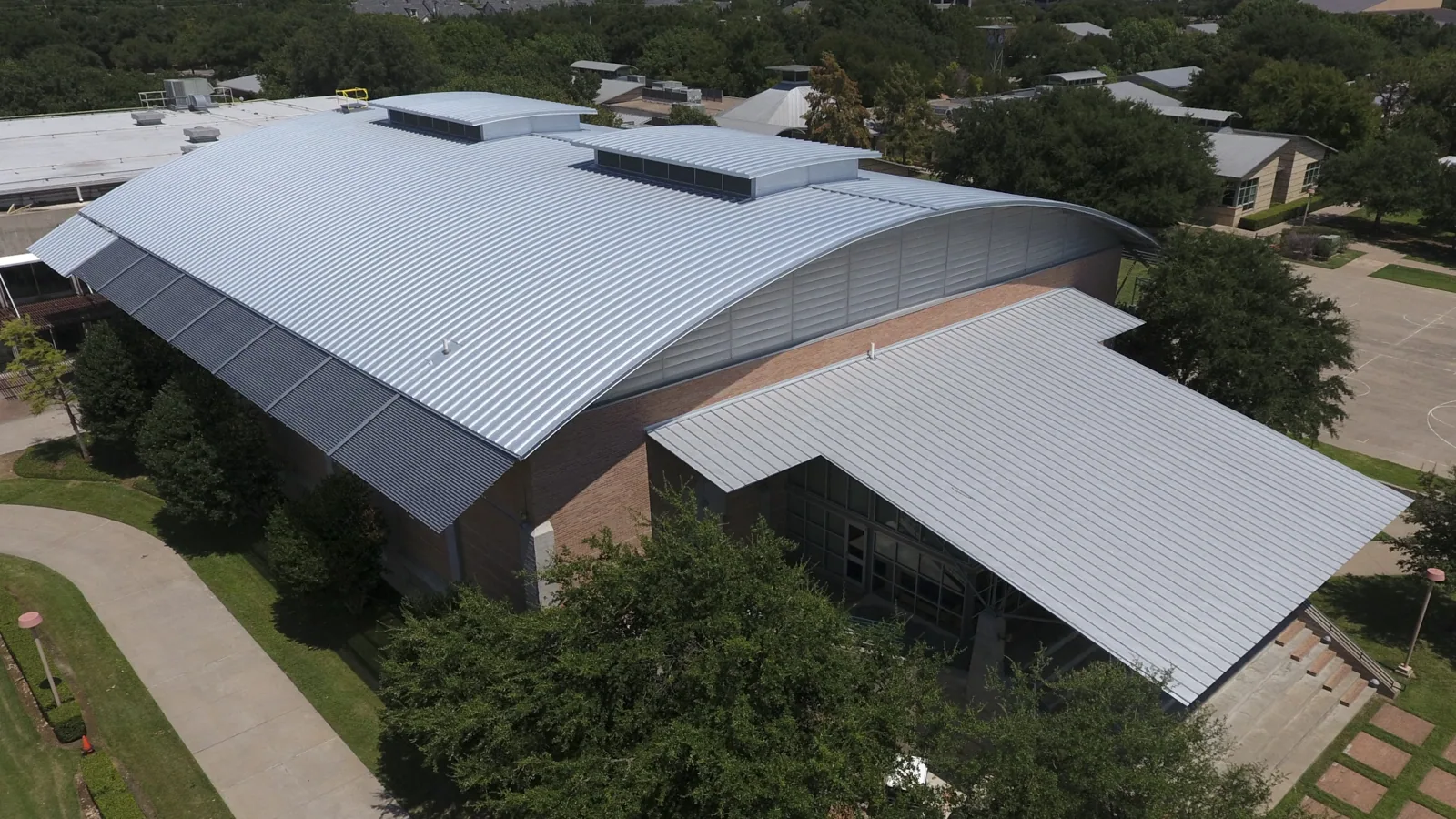
Wind can lift an edge, loosen coping, or place stress on a seam while leaving the roof field apparently intact. We examine perimeter metal, fasteners, terminations, wall transitions, laps, and corners for movement or separation. Photos show both the damaged detail and enough surrounding surface to judge whether the condition stops there or continues into the next roof zone. On metal panels, a dent does not by itself establish a failed seam or coating; close photos should capture finish damage alongside loose fasteners, open laps, or broken sealant. On membrane roofs, impact marks and punctures are separate observations. We check whether the detail remains watertight and compatible with a permanent repair rather than setting scope from the storm date alone.
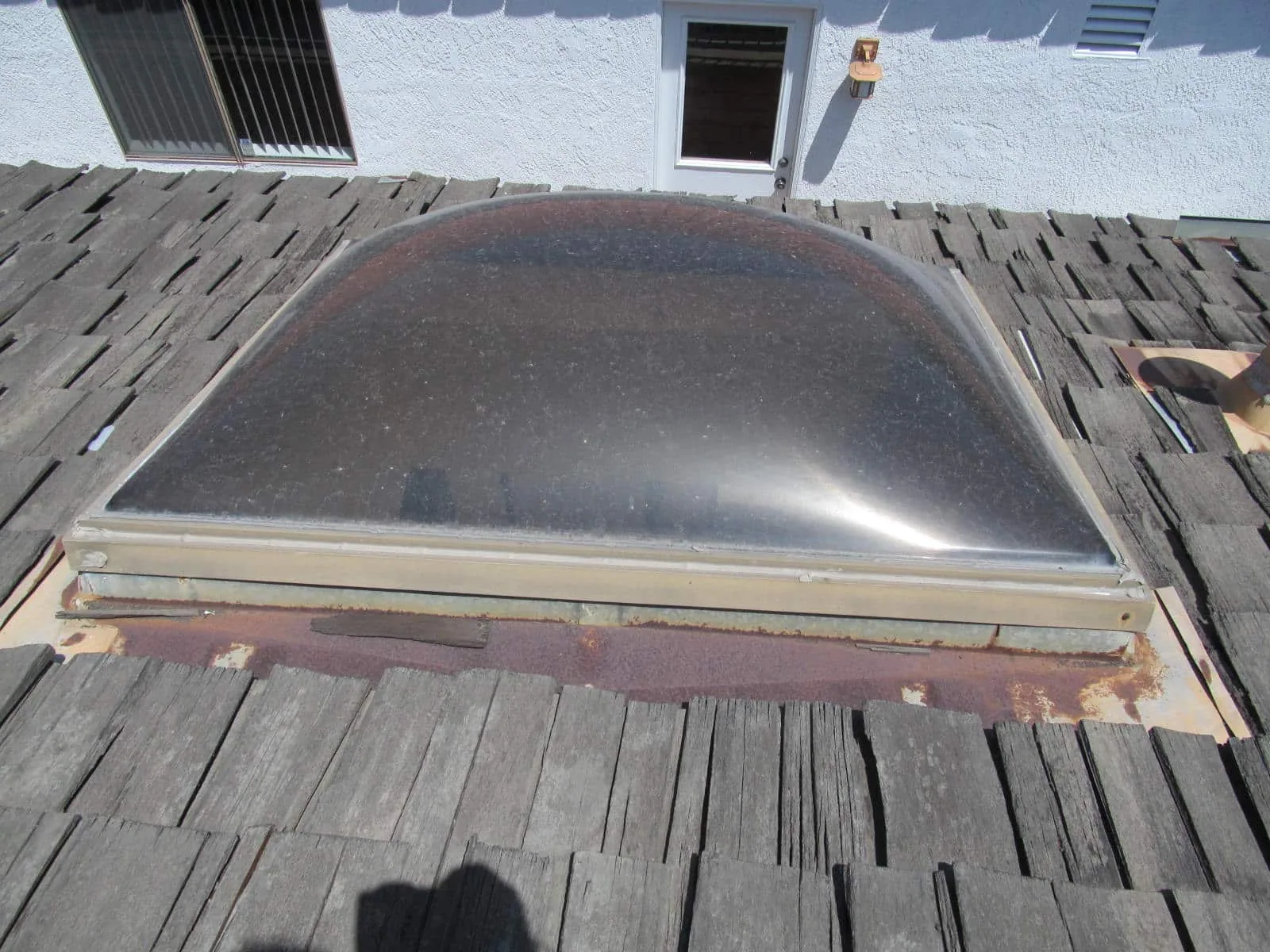
We inspect curbs, vent pipes, conduit, skylights, and other penetrations for displaced flashing, pulled sealant, or a new opening. Severe thunderstorms across southern New England can produce hail at least one inch across and damaging winds. After a reported storm, we look for impact evidence on the roof and compare it with the building's condition record.
When the problem centers on coping, edge metal, or gutters, a perimeter repair can define the affected run and attachment work. If the surface or seam has been punctured, the wind damage scope separates storm findings from older repairs and wear.
Trace Rain and Coastal Water Separately
Floodwater at grade and rain entering through a roof are different pathways. We document where water appeared inside, how high it reached if recorded by the owner, and whether roof openings, wall transitions, or drains show related conditions. A coastal-flood report does not by itself identify a roof defect; a roof leak may also occur without surrounding floodwater. The inspection keeps those findings separate.
After a reported event, we check drainage and edges while the actual Lynn roof determines its slope, outlet capacity, and observed ponding. We inspect drains, scuppers, overflow paths, low areas, and membrane around the connections. A drainage check may reveal a blockage, a damaged connection, or a condition requiring broader review.
If a leak path remains uncertain, we identify what can be established from the accessible surface and whether moisture testing or a selective opening could answer the remaining question. The photo record distinguishes confirmed storm damage from areas that need further examination.
Compare Immediate Repair with Broader Renewal
A localized puncture with sound membrane around it may support a contained patch. A displaced edge that runs along multiple sections, saturated insulation, or widespread seam separation may call for more than one repair. We measure the affected area, check nearby attachment and transitions, and explain the evidence behind a larger scope. No storm label substitutes for that inspection.
The written estimate separates temporary protection, tear-out, substrate work, replacement material, flashing, access, disposal, and follow-up tests. If damage overlaps prior wear or an old patch, we identify that distinction in the condition log. A claim documentation visit can provide dated photographs and a repair description, while our roofing scope remains focused on work needed to restore the roof.
When the assembly has recurring failure or broad moisture, we compare repair with a replacement evaluation. For occupied facilities, a phased dry-in plan can keep open roof areas limited and specify how each shift ends weather-tight.
We also separate the observed condition from the question of responsibility. The repair scope describes the physical work required to close the roof, while dated photographs and prior maintenance records help the owner assemble a chronology. Where a cause cannot be established from visible evidence, we say what needs a test or additional documentation instead of presenting an assumption as a finding.
Keep the Storm File Tied to the Building
The closeout file should include inspection date, affected roof zone, photos, temporary protection, permanent work, materials used, and any remaining exposure. We label observations separately from owner reports and note conditions that were not accessible. If the next rain reveals a new path, the record lets the owner compare it with the original findings rather than reconstruct events from memory.
For a site in Saugus, we coordinate follow-up with the building's operating contact. Cliftondale Square and Saugus Center are economic-development areas, but each roof's contact confirms access and delivery timing for the repair. Each roof gets its own assembly record and condition log.
Send the building use, affected zone, storm date, leak timing, access contact, and any prior repair records. We will arrange a roof walk and return a photo-supported scope that separates emergency dry-in from the lasting repair.
We date each observation so later inspections can compare the same detail.
Those dated observations support a consistent follow-up inspection after the next weather cycle.
Commercial Roofing Questions
Does regional storm history confirm damage at my building?
No. It informs which details we inspect, but damage must be visible or otherwise confirmed at the property. We document the roof zone, observed condition, and any test still needed.
Can you stop an active leak before completing the full assessment?
Yes. We can evaluate safe temporary protection first, then schedule the full inspection when conditions allow. The follow-up record separates dry-in from permanent repair.
How do you distinguish wind damage from an older roof issue?
We compare dated photos, prior repair records, edge and seam condition, and the location of any new opening. Where the timing or cause remains uncertain, we state that limitation rather than assign a cause without evidence.
Will the inspection include nearby roof sections?
We inspect adjoining areas that can be reached safely because a displaced edge or water path may extend beyond the visible interior leak. Inaccessible zones are listed for follow-up.
What should the storm repair proposal show?
It should identify temporary protection, measured repair area, materials, access, disposal, concealed conditions, and the point where the roof is closed. We keep those items distinct from a broader renewal comparison.
Request a Storm Damage Roof Walk
Provide the building use, affected zone, storm date, leak timing, access contact, and available roof records. We will document the condition and return a defined repair scope.
Back to Commercial Roofing Services.