Commercial PVC Roofing in Lynn, MA
A Lynn food-processing or light-industrial facility has to evaluate its roof system beside the work happening below it. PVC is a thermoplastic single-ply option whose heat-welded seams and membrane formulation may suit some commercial conditions, but the product name alone does not settle compatibility or serviceability. Our roof walk records the deck where visible, membrane condition, insulation, drains, curbs, exhausts, and rooftop traffic by zone. The assembly record then separates observable concerns from questions that require a test opening, product documentation, or input from the design professional.
Lynnway Park contains warehouse, food-processing, storage, and cold-storage uses; Lynn Harbor is a marine-dependent industrial area. Those settings call for facility-specific exposure and access planning before a PVC repair or replacement is compared. We link findings to dated photos, a marked roof plan, and a repair boundary so the owner can compare PVC with TPO or KEE based on documented requirements. A commercial roof inspection also helps clarify whether the question is a repair, recover, or larger replacement decision.
Review PVC roofing for Lynn facilities with attention to chemical exposure, welded seams, rooftop equipment, drainage, and the existing assembly.
Process areas: identify what reaches the roof
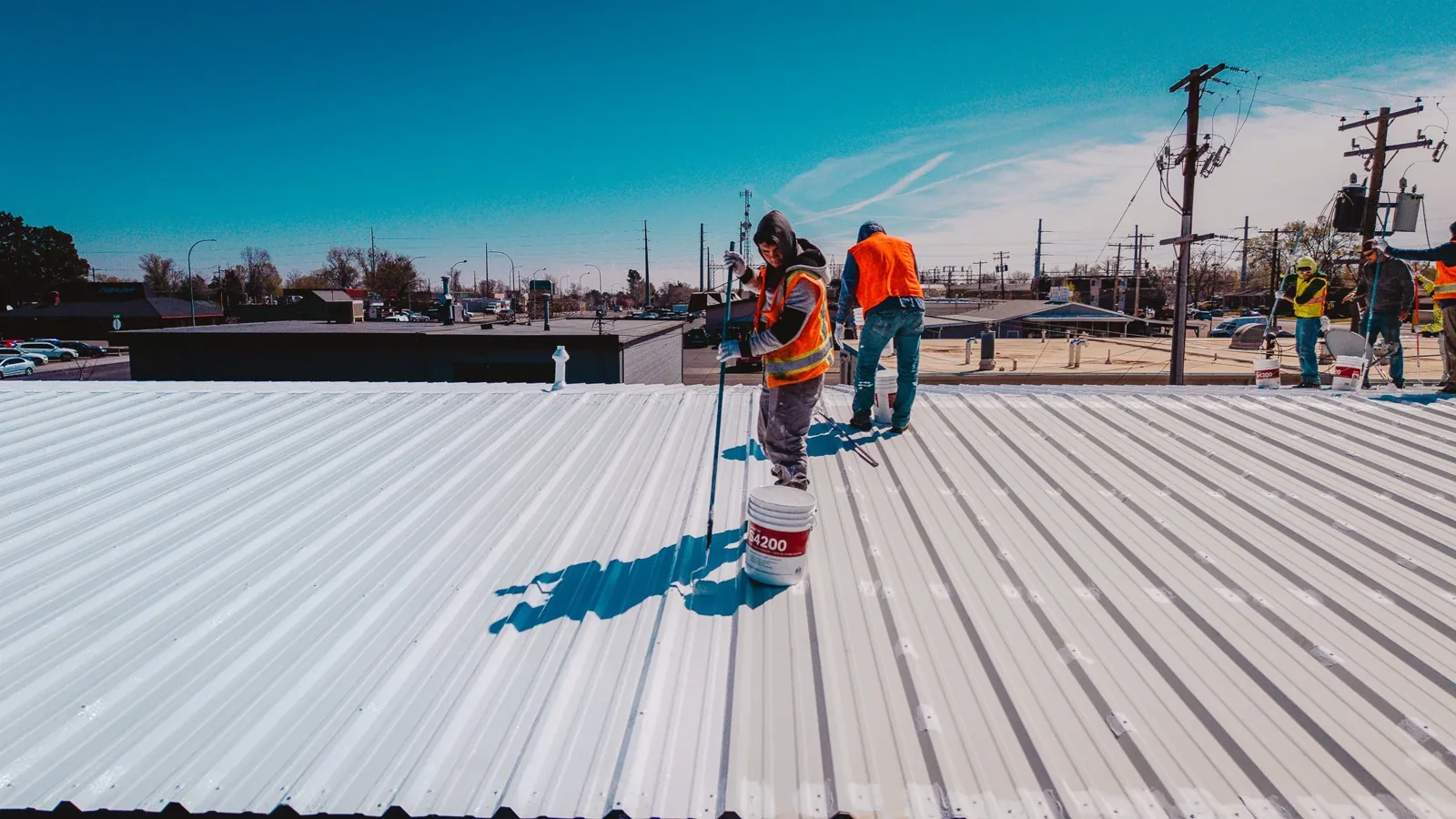
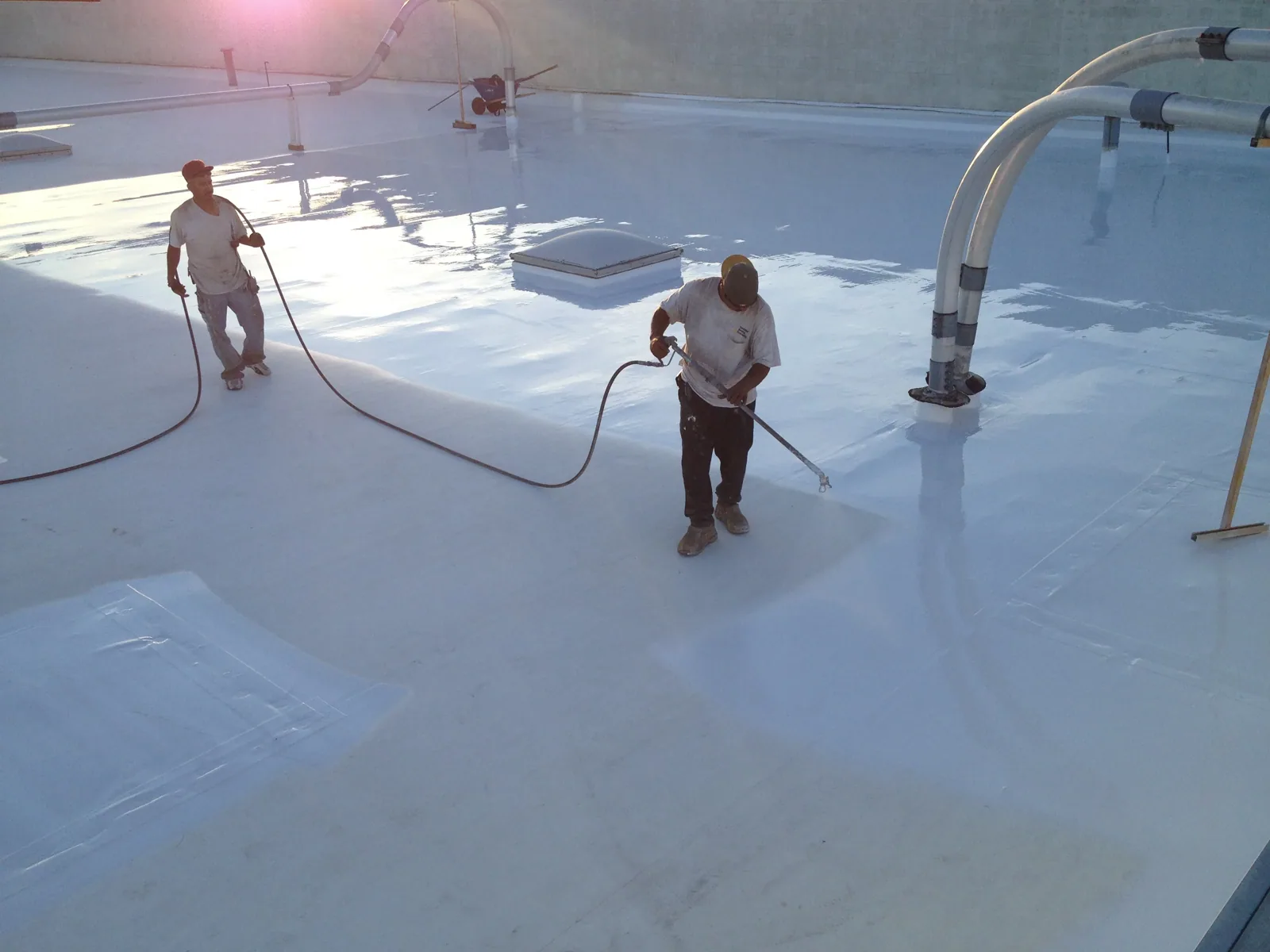
Food production and other industrial operations can place exhaust, grease, cleaning agents, heat, or maintenance traffic near roof surfaces. Those are site conditions to investigate, not a blanket claim that PVC is compatible with every substance or process. During the survey, we ask what equipment serves the area, which discharge points are active, whether containers or service paths cross the roof, and whether the owner has product-safety or indoor-air requirements. The roof record names each relevant zone and points to the information the installer or manufacturer needs before recommending a membrane.
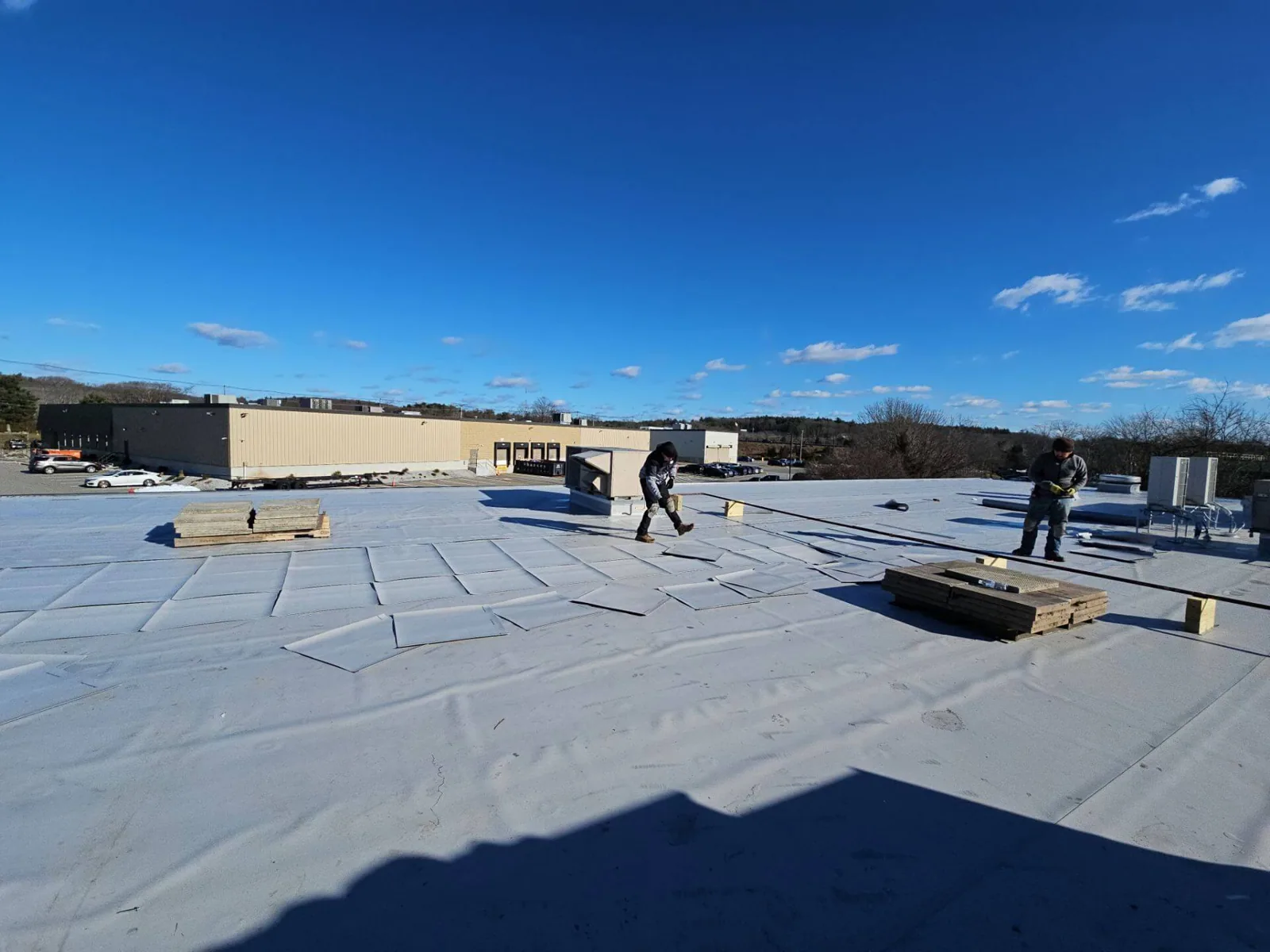
At Lynnway Park, warehouse and processing schedules can constrain delivery, crane, and access windows. We coordinate those limits with the facility contact. If maintenance staff must continue reaching rooftop units, walk paths and protection details belong in the assembly plan. If the building operates near the waterfront, staging and wind exposure should also be reviewed without presuming a specific storm impact. The resulting scope can explain how PVC seams, flashings, and penetrations will be inspected before they are covered.
Membrane and welds: record what is visible
A PVC survey checks for splits, punctures, surface wear, open seams, patch edges, wrinkles, and movement at transitions. We also note water paths and any condition around drains, equipment curbs, wall terminations, expansion joints, and perimeter metal. A failed-looking seam does not by itself establish how far moisture extends below the sheet. When the roof history or visible evidence leaves that question open, a selected test opening can document the layers and substrate at that point. The photo record identifies the opening, findings, and limit of what it can establish.
Heat-welded seams need compatible materials, suitable preparation, and inspection under the conditions set for the project. Existing coatings, residues, patches, or a prior membrane can complicate that work, so the scope should say how these surfaces will be evaluated. At the Lynn Harbor Port Area, marine exposure makes perimeter details worth a close look, though only field observations establish whether a particular edge or flashing needs work. If a review identifies a localized concern, compare a defined repair with a broader membrane scope rather than treating every roof zone alike.
Drainage and weather: connect conditions to details
The local roof calendar spans winter cold, summer warmth, annual rainfall, and regular snowfall. PVC planning therefore records drain paths, flashing transitions, seasonal access, and the conditions available for seam welding. The inspection records actual low points, drain flow paths, overflow routes, membrane terminations, and evidence of movement or water entry. Any slope or drainage change should be shown on the plan and checked against the building conditions.
After a regional storm, the reviewer maps any displaced sheet, puncture, debris mark, or reported water entry before assigning a cause. The roof's PVC field, seams, edge details, and penetrations are photographed by zone for a repair comparison. Along the Lynnway, access and delivery movements may affect inspection timing. A condition report can keep the dated finding distinct from the inferred cause and support a later comparison.
System selection: verify compatibility before pricing
PVC and other thermoplastic membranes share some installation concepts, but the decision depends on project-specific formulation, exposure, substrate, attachment, detailing, and manufacturer requirements. If a facility has chemical or process exposure, identify the actual substance and concentration, contact pattern, temperature, and cleaning practice, then obtain compatibility guidance for the proposed product. A generic PVC description cannot establish compatibility. The scope records product, thickness, reinforcement, attachment, flashing method, and substrate requirements so competing proposals can be compared on equal terms.
Recovering over an existing roof may be considered only after the layers, moisture, stability, and applicable project requirements have been reviewed. A replacement can expose concealed conditions and reset insulation or transitions but brings more tear-off and open-roof exposure. A recover overlay is a distinct alternative with its own eligibility questions. Massachusetts commercial building and energy rules should be checked for the actual project. We mark what is confirmed, what remains concealed, and what a test opening or design review would resolve before the owner selects an assembly.
Installation record: coordinate work and closeout
The plan should state how crews will reach each roof zone, where materials can be staged, and how the building remains protected if weather interrupts work. For occupied commercial and industrial properties, the access window may need coordination with food handling, shipping, customer entrances, or equipment maintenance. Temporary dry-in and end-of-shift checks should be assigned and documented. Before PVC seams and flashing are covered, the project team should record substrate readiness and inspect the specified details according to the project requirements. A daily log gives the owner a clear account of progress and any changed boundary.
Closeout should include the final roof-zone plan, photos of field seams and transitions, drain and edge work, repair locations, product and assembly information, and any concealed condition that altered the scope. Keep operating instructions and follow-up needs with the building's assembly record. A later replacement review or routine roof walk can compare findings with that baseline. Owners should receive a precise record of the installed scope and known limitations, rather than a broad promise about future performance.
Commercial Roofing Questions
When might PVC be considered for a Lynn commercial roof?
It may be considered when the roof assembly, project requirements, exposure, attachment, and product-specific compatibility support it. For a processing facility, identify the actual rooftop discharge or chemical contact before selection. A field review and manufacturer guidance are more useful than choosing from a generic membrane description.
Does a PVC membrane tolerate every food or industrial chemical?
No. Compatibility depends on the specific formulation and the substance, concentration, temperature, and duration of contact. Record the process conditions and obtain written product guidance before including a PVC system in the final scope.
How are PVC seams evaluated during a roof review?
The reviewer records visible seam condition, patch edges, transitions, substrate and moisture indicators, then documents any test opening separately. Installation quality checks should follow the project requirements and identify what was inspected before the work was covered.
Can an existing roof stay below new PVC?
That possibility depends on moisture, stability, compatibility, layer limits, and applicable requirements. The survey should document the existing assembly and any test-opening results before an overlay is priced as a viable option.
What should I send before scheduling a PVC roof walk?
Provide the building use, roof zones of concern, known process or exhaust exposure, access contact, and a practical schedule window. Existing plans, product records, and repair photos help focus the review; the roof walk confirms the assembly and current condition.
Request a PVC roof review
Share the building use, any process exposure, the roof zones in question, an access contact, and a workable schedule window. We will document visible conditions and identify what needs confirmation before a system scope is selected.
Back to Roof Systems.