
Commercial Roofing for School Districts in Lynn, MA
A school roof decision has to be timed to the calendar below it. For a district in Lynn, MA, an inspection record should identify each building and roof zone, report observed conditions, and show which work can fit summer access or a limited school-day window. We start with the use of the space below, the leak or maintenance history, and the facility contact's access rules. A recommendation then separates a local repair from an area that needs testing or a phased renewal. School building roof work can be planned around classroom, kitchen, gym, and administrative use once the district confirms each building's actual schedule. We can also note roof areas that remain inaccessible, prior repairs that could not be verified, and conditions best revisited during a scheduled break.
Commercial Roofing Lynn helps school facilities teams inspect roofs, plan phased repairs, and document work around student schedules and campus access.
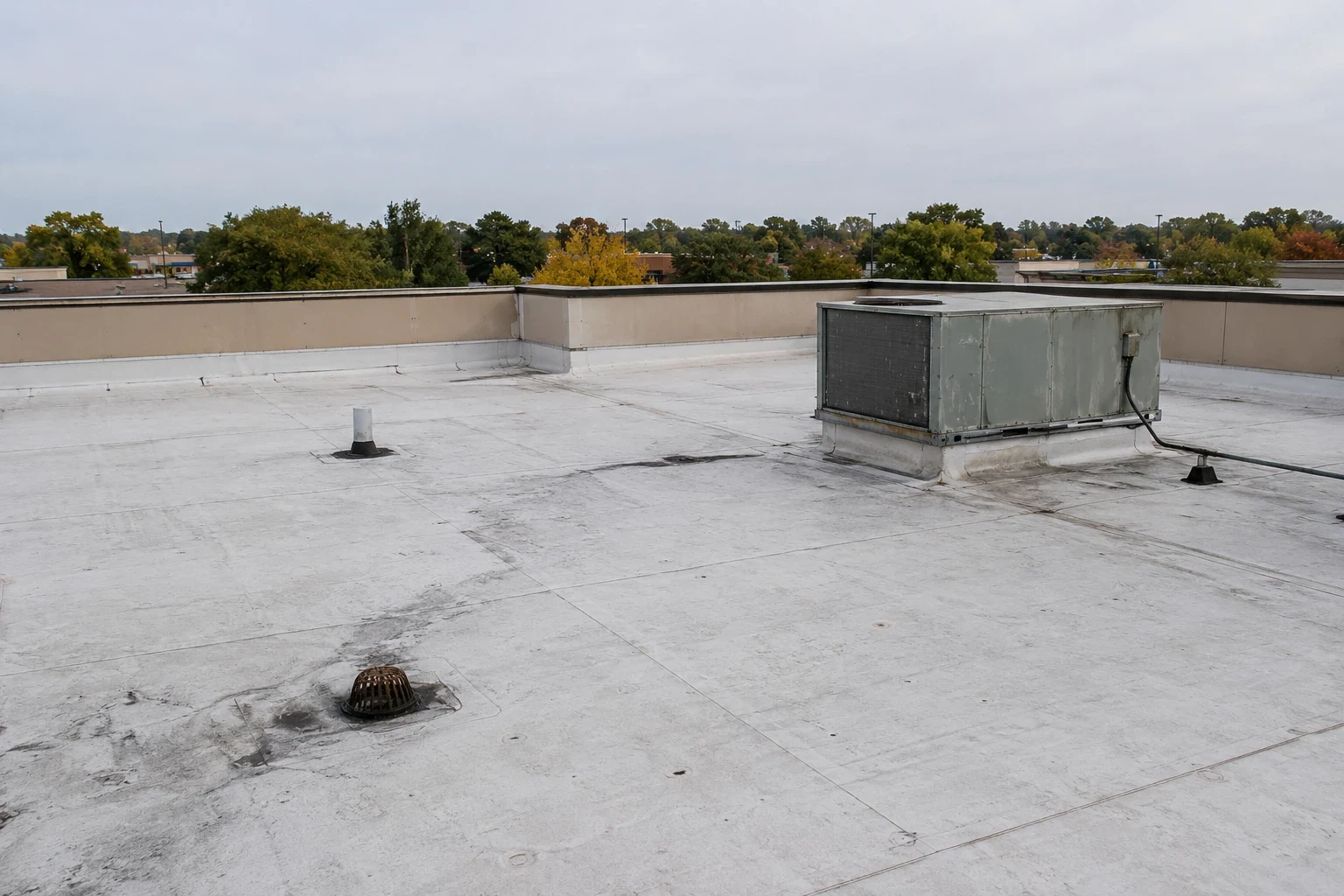
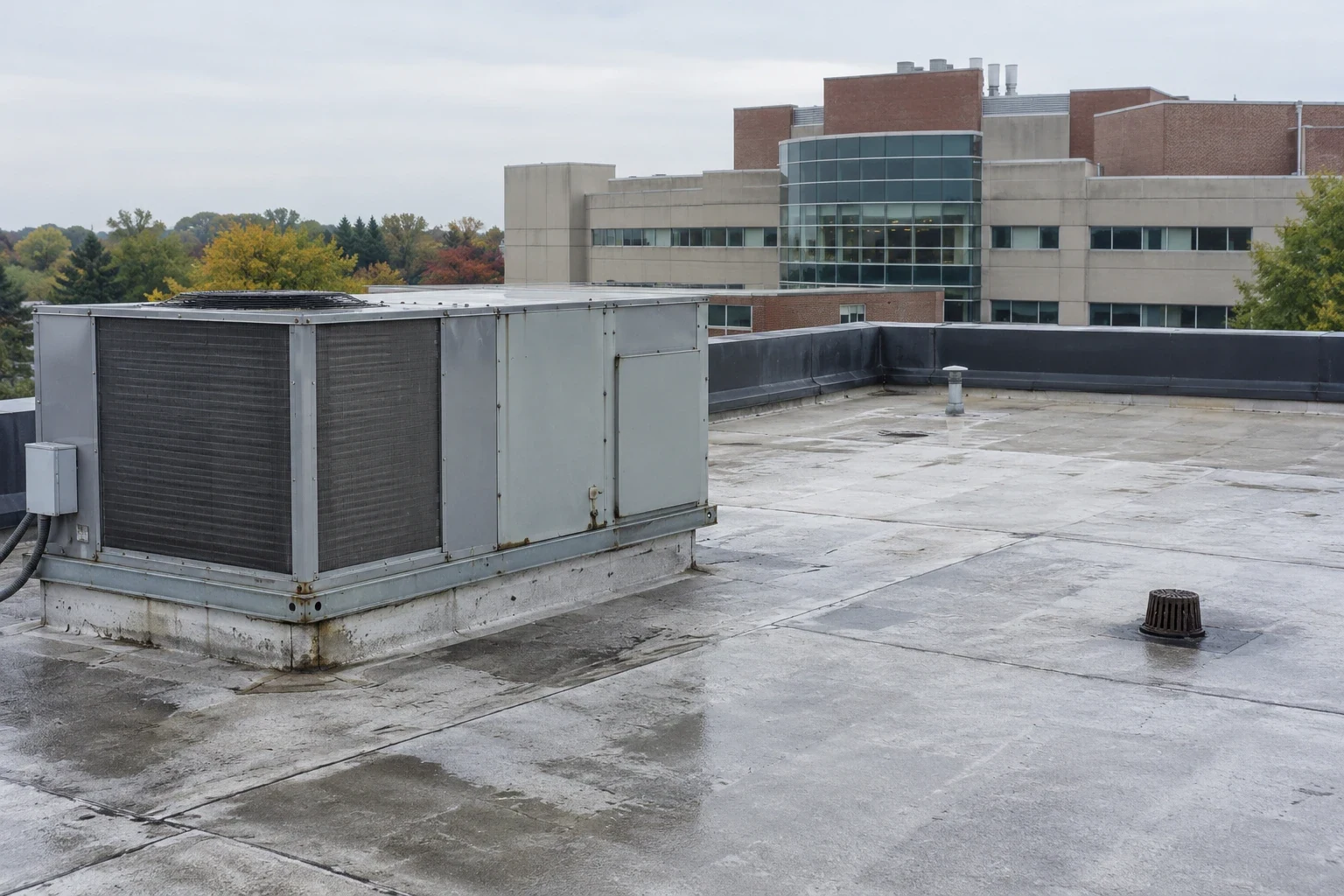

Calendar and access: set the school-year boundary
Before mobilization, we confirm when students and staff are present, which entries and accessible routes must remain open, how deliveries are handled, and who can approve a change in the field. Summer work may offer a longer window, but a roof can still be divided into sections so the area above a kitchen, office, or occupied program is not left open at shift end. The project plan should identify noise, lift placement, roof access, temporary protection, and the daily closeout point. Occupied-building sequencing provides a practical way to define those boundaries when work cannot wait for a full break.
District staff can provide prior repair invoices, roof plans, warranty materials, and reports of interior water. We compare those records with field conditions and note any mismatch, including additions or penetrations that are missing from the plan. Public facility teams often need a similarly clear approval trail, although the school operator sets its own access and safety requirements.
Roof-zone record: connect the room report to the surface
A ceiling tile, gym floor, or storage area report gives a starting point, not the extent of a roof repair. We map where water appeared and when, then inspect the corresponding roof zone for seams, curbs, flashings, edge details, drains, and prior repairs. Water can travel between the roof entry and the visible stain, so a diagnosis should state what was observed and what remains untested. If moisture may be concealed, a test opening can confirm the layer condition before a larger removal area is written into the estimate. A commercial roof inspection can record the route and access conditions for future comparison.
Photos should include enough context to locate each detail later, with a date, orientation, roof section, and relation to the room or equipment below. We keep school-day reports separate by building so a condition at one site is not assigned to another. A district can then review active leaks, safety concerns, and longer-term maintenance in distinct categories and set the next action for each one.
Seasonal exposure: check drainage after rain and snow
Lynn’s North Shore climate brings winter freezing and snowfall, summer heat, and precipitation through the year. Those conditions make drainage, edge transitions, and flashing details useful inspection priorities before the school year and after severe weather. They do not establish damage at any district building. When a storm or freeze-thaw period coincides with a leak, we document the event timing and inspect the roof rather than treating every open maintenance item as weather-related.
Downtown Lynn's recognized arts district places galleries, restaurants, retail, and public events in the urban center; the Lynnway corridor serves a different regional movement role. Those surroundings may affect deliveries near a school property, but the district's own calendar and site routes control the work plan. Downtown Lynn and neighboring commercial areas can be named as context for a regional review without implying that a school roof shares the conditions of a nearby business.
Approval package: compare work by building and phase
A useful estimate names the building, roof zone, proposed work, measured quantities, assumed layers, access plan, temporary dry-in, and exclusions. If a school can be repaired now and renewed later, we show the boundaries and risks of both options rather than blending them into a single vague allowance. For each project, the district's designer and municipal reviewer determine which building and energy rules attach to the roof work. For school roofing, the project team should verify 780 CMR's 10th Edition provisions and Massachusetts amendments to IBC 2021. The commercial energy review also references IECC 2021 and ASHRAE 90.1-2019; the permit and scope govern which requirements apply. We give facilities staff the roof assembly and proposed change so the code discussion can be matched to the actual scope.
After work, the district should receive photos, materials, completed roof zones, remaining observations, and a follow-up recommendation. The closeout file should also note whether the work changed an assembly or warranty record. Portfolio roof coordination uses similar building-by-building records, but school facilities staff can set the reporting fields that match their own maintenance system and approval process.
The district can also use the inspection findings to rank near-term risk separately from work that can be scheduled around the annual calendar. An active interior leak, an open edge, and a broad area of aging membrane are different conditions and should not be assigned one urgency label. We describe the consequence observed, the evidence supporting it, and the next action with the access or test needed. Facilities leadership can review that list with finance and school operations, then choose which scopes need design, procurement, or a short-term protective measure.
If a storm interrupts a project, the supervisor needs a reliable route to report changed conditions and approve a revised boundary. We identify the exposed section, temporary measure, and return inspection required after the weather clears. The record then tells the district what was completed, what remains open, and which rooms or routes should be checked before normal use resumes. That information is especially useful when maintenance staff rotate between sites or when a contractor handoff occurs during a school break.
Commercial Roofing Questions
Can a roof project be completed while school is in session?
Some work can proceed during the school year when the roof area, access route, noise, safety boundary, and daily closure plan can be controlled. We review the site with facilities staff and define which spaces or services need protection before we set a sequence. The district can identify school events or testing periods that require separate access planning by each building.
What records should the district gather before an inspection?
Roof plans, prior repair descriptions, leak reports, warranty paperwork, and any renovation history help us prepare. We still verify the assembly in the field and identify missing or conflicting information rather than carrying an old plan forward as confirmed condition.
How do you handle multiple school buildings with different roof ages?
Each building receives its own map and condition list, then the district can compare urgency and access needs across the portfolio. We avoid combining roof conditions into a single average, because a school with an active leak may need a different decision from a site with planned maintenance.
Can summer work be divided into separate phases?
Yes. We can break the scope into roof zones and state the expected daily closure, dry-in, and access return for each phase. The district calendar, weather exposure, material availability, and site rules determine how those phases fit.
What should be included in the closeout file?
Keep final photos, completed locations, material descriptions, approved changes, remaining exclusions, and a follow-up inspection recommendation. Use the same roof-zone labels as the initial report so a facilities manager can compare the new condition with the inspection record.
Schedule a Lynn school roof inspection
Share the school calendar, building list, access contact, roof plans, and reported areas. We will return a building-specific record and phased scope options.
Back to Industries We Serve.