
Commercial KEE Roofing in Lynn, MA
For a waterfront warehouse or processing facility, a KEE membrane proposal should be reviewed against the roof conditions and exposure the owner can document. KEE products use a PVC alloy formulation, but names and formulations vary; chemical compatibility, flexibility, and other performance characteristics must be confirmed for the exact product and application. The roof walk records the existing layers, attachment, drains, penetrations, exhausts, repair history, and perimeter details. A photo-supported assembly record gives the project team a basis for deciding whether KEE belongs in the system comparison.
Lynn Harbor supports marine-dependent commerce, and Lynnway Park accommodates storage, food processing, warehousing, and cold storage. We confirm the building's process contacts, material routes, and access limits before selecting the inspection sequence. We ask what contacts the roof, how equipment is serviced, where materials can stage, and which areas have limited access. Findings can be compared with PVC membrane roofing and TPO membrane roofing after the project team verifies product and assembly requirements. A roof inspection or a replacement review can clarify the decision boundary.
Review KEE membrane options for Lynn commercial buildings with product-specific compatibility, seam, flashing, and assembly checks.
Building process: document contact and service paths
A commercial roof may receive exhaust discharge, cleaning residue, lubricants, maintenance traffic, or heat from equipment. The facility should identify each exposure that could affect a membrane and share the process conditions with the designer and manufacturer. We note discharge points and service paths during the survey, then request product-specific written guidance before treating KEE as a compatible choice. General statements about a polymer family cannot substitute for review of a substance, concentration, contact duration, and temperature at the building.
At Lynnway Park, active loading and cold-storage functions can limit access windows or restrict work near operating equipment. A zone map should show those interfaces, the safest route to the work area, and any protection needed to keep service access available. Along the waterfront, marine-related activity can affect staging, while Downtown Lynn may bring tenant entrances and limited laydown areas into the schedule. We record these constraints separately from roof defects. That separation lets the owner review a membrane decision without confusing operational limits with evidence that the existing system has failed.
Assembly evidence: inspect seams, transitions, and substrate
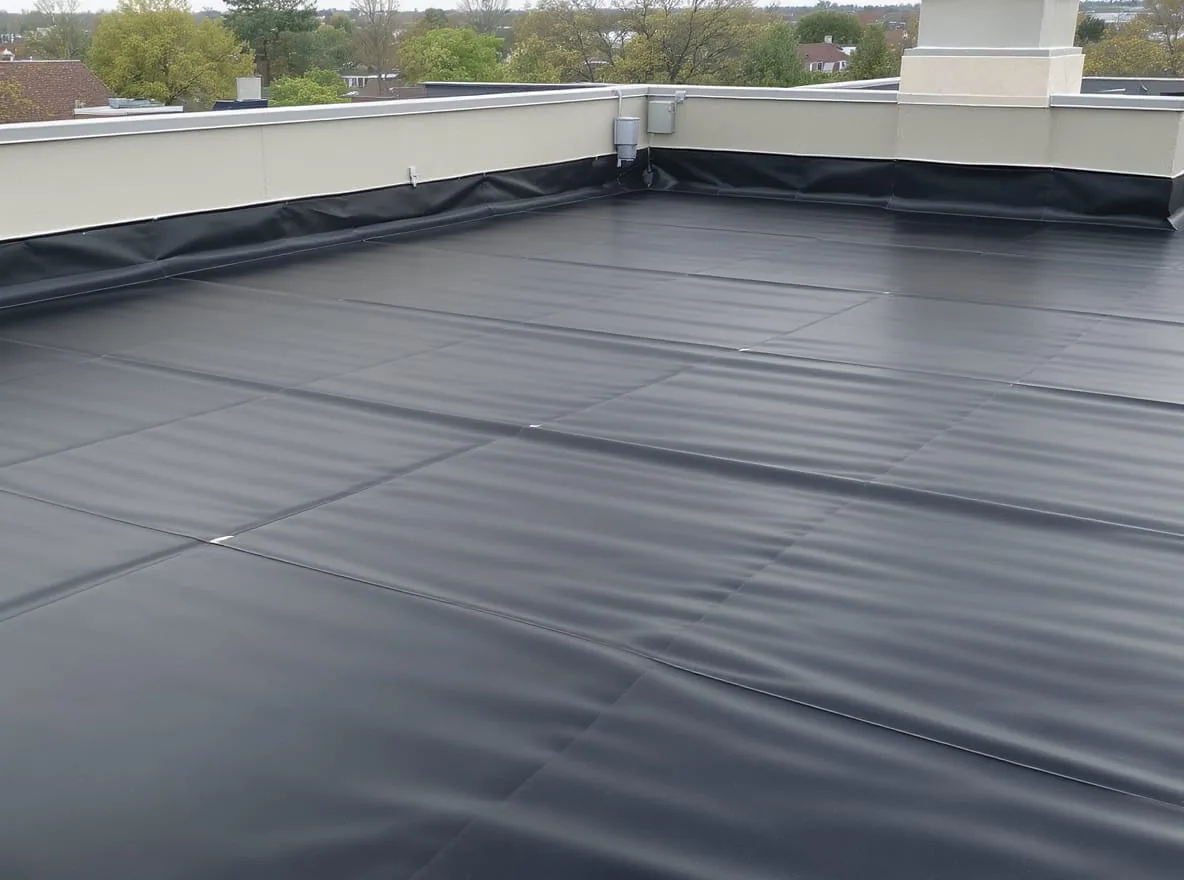
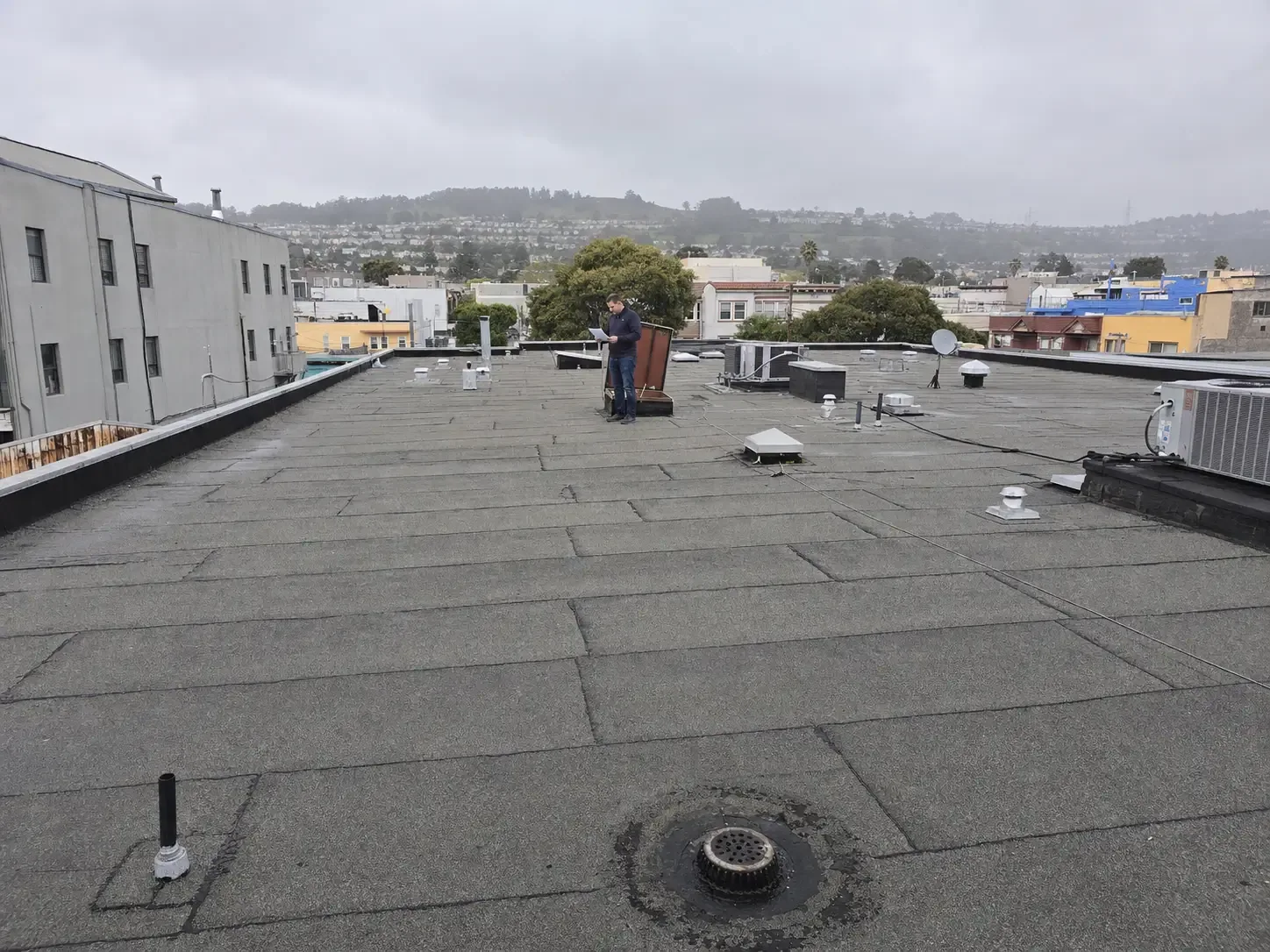
KEE membrane evaluation includes visible sheet condition, seam quality, patches, movement, penetrations, corners, wall terminations, and attachment at the edge. Record whether the current system is PVC, another single-ply product, coating, or a layered assembly; do not assume material compatibility because two products sound similar. If patch history or an uncertain substrate makes the condition unclear, a selected test opening can document the layers at that location. Label the opening on the roof plan and state exactly what it did and did not reveal.
For a new system, the substrate must be suitable for the specified attachment and welding procedures. The scope should name membrane and accessory products, insulation, cover board if specified, edge securement, flashing, and drain details. At Lynn Harbor, reviewers should examine actual perimeter conditions and wind-related details without assuming a failure from coastal setting alone. At Saugus, equipment supports and repeated service routes may warrant particular attention. Photos tie every finding to a roof zone and date.
Water management: check the roof in place
A KEE system review in Lynn should trace water from the field surface to each drain, overflow, and scupper. Boston Logan's seasonal record shows a pronounced winter-to-summer temperature change, plus substantial snow and annual precipitation for the North Shore. We map the actual flow lines and transitions on the roof, then check whether the specified slope or taper delivers water to an open outlet. The inspection also records ponding, separated flashing, and any seam condition observed.
During Sandy in 2012, coastal flooding affected Massachusetts and regional winds were measured at Boston and Revere Beach. Following a storm report, we inspect KEE seams, edges, penetrations, and flashings for movement or open details. A recover overlay comparison and a roof condition report can keep the assembly choice tied to tested conditions.
Product review: make KEE claims verifiable
KEE should be evaluated as a named product and complete assembly, not as proof of chemical resistance or longer service life. The owner or design team can request the exact product data, application limits, compatible accessories, warranty terms, and written response to known exposures. Confirm the proposed substrate, seam method, attachment, edge details, and maintenance requirements. If the building sees a specific chemical or process emission, document that condition and obtain a product-specific compatibility determination before the bid is finalized.
Compare the choice with repairs and other systems using the same roof zones. A repair may preserve an otherwise serviceable membrane where a discrete condition is documented. Recover could reduce tear-off when the existing roof is stable, dry, suitable, and permitted by project requirements. Replacement gives the team access to concealed conditions and a chance to adjust insulation or drainage, but expands demolition and weather exposure. Massachusetts commercial building and energy code provisions also need project-specific review. The scope comparison should identify confirmed conditions, assumptions, test-opening needs, and the point at which the owner must authorize a change.
Work controls: maintain access and document completion
A KEE installation plan should make the work area and daily dry-in limits clear. Confirm the access contact, delivery approach, crane or hoisting needs, rooftop equipment routes, and the building schedule before mobilization. Food-processing and storage operations near Lynn Harbor may have controlled areas or timed receiving activity. Downtown commercial space can require pedestrian separation and smaller staging footprints. The site team should know how weather delays affect open areas and who verifies the roof before each shift ends. A written sequence reduces uncertainty when a tie-in must wait for a later access window.
Closeout should preserve product and assembly identifiers, photos of the substrate and seams, transition and drain details, marked repairs, and any concealed conditions that changed the scope. If product compatibility review shaped the selection, retain that correspondence with the building file. The record should state inspection limitations and any maintenance access restrictions. A future repair review can use the same zone map, while a scheduled follow-up inspection can compare conditions without implying that the system requires no maintenance.
During installation, the crew checks the substrate and edge details against the approved assembly before covering them. A later service visit can compare the recorded seam, curb, drain, and perimeter photos with any new report. If a chemical exposure changes or equipment moves, the owner can document that change and request product-specific guidance before specifying a patch or accessory.
Commercial Roofing Questions
What does KEE mean in a commercial roofing proposal?
It refers to a PVC-alloy membrane formulation, but the exact product and assembly matter. Ask for the named membrane, accessories, application requirements, and product-specific documentation rather than relying on the acronym as proof of a particular performance outcome.
Is KEE automatically compatible with industrial chemicals?
No. Compatibility must be checked for the exact formulation and the substance, concentration, contact pattern, and temperature. A facility should document its actual exposure and request a written product-specific response before the system is selected.
Can KEE be installed over an existing roof?
That depends on the existing layers, moisture, stability, compatibility, and applicable project requirements. A roof survey and, if needed, a test opening should document the evidence behind any recover recommendation.
What details deserve close review on a KEE roof?
Review the substrate, heat-welded seams, corners, penetrations, curbs, walls, drains, and perimeter securement. The scope should identify the specified products and how these transitions will be prepared, installed, and recorded.
How should coastal exposure affect a KEE inspection in Lynn?
We inspect edges, flashings, and water-management details directly, then record any displacement or water entry found. Record conditions found at the building and keep the observed condition separate from assumptions about its cause.
Review KEE for your building
Provide the facility use, known roof assembly, relevant process exposure, affected zones, access contact, and project timing. We document the observed conditions and confirm product requirements before specifying a KEE system.
Back to Roof Systems.