
Warehouse Roofing in Lynn, MA
Lynnway Park includes warehouse, food-processing, storage, and light-industrial uses in a waterfront setting. A warehouse roof plan has to account for what sits below each zone: rack aisles, loading doors, stored goods, refrigeration equipment, or a route that must stay open. We walk the assembly, mark seams, penetrations, drains, and edge details, then tie each finding to a roof zone and the operating area below. The photo record separates visible damage from a suspected path, so an owner can compare a local repair with a broader scope.
Lynn Harbor supports shipping, fishing, vessel services, and other marine-dependent commerce. Along the Lynnway Corridor, delivery movement and staging may affect how crews reach a property. Those area conditions help set the access discussion, but the actual roof condition determines the repair boundary. We ask for the building use, current leak reports, access contact, and a workable window before the walk begins.
Assess warehouse roofs in Lynn with mapped loading zones, documented edge and drain findings, and a repair boundary suited to active storage and shipping.

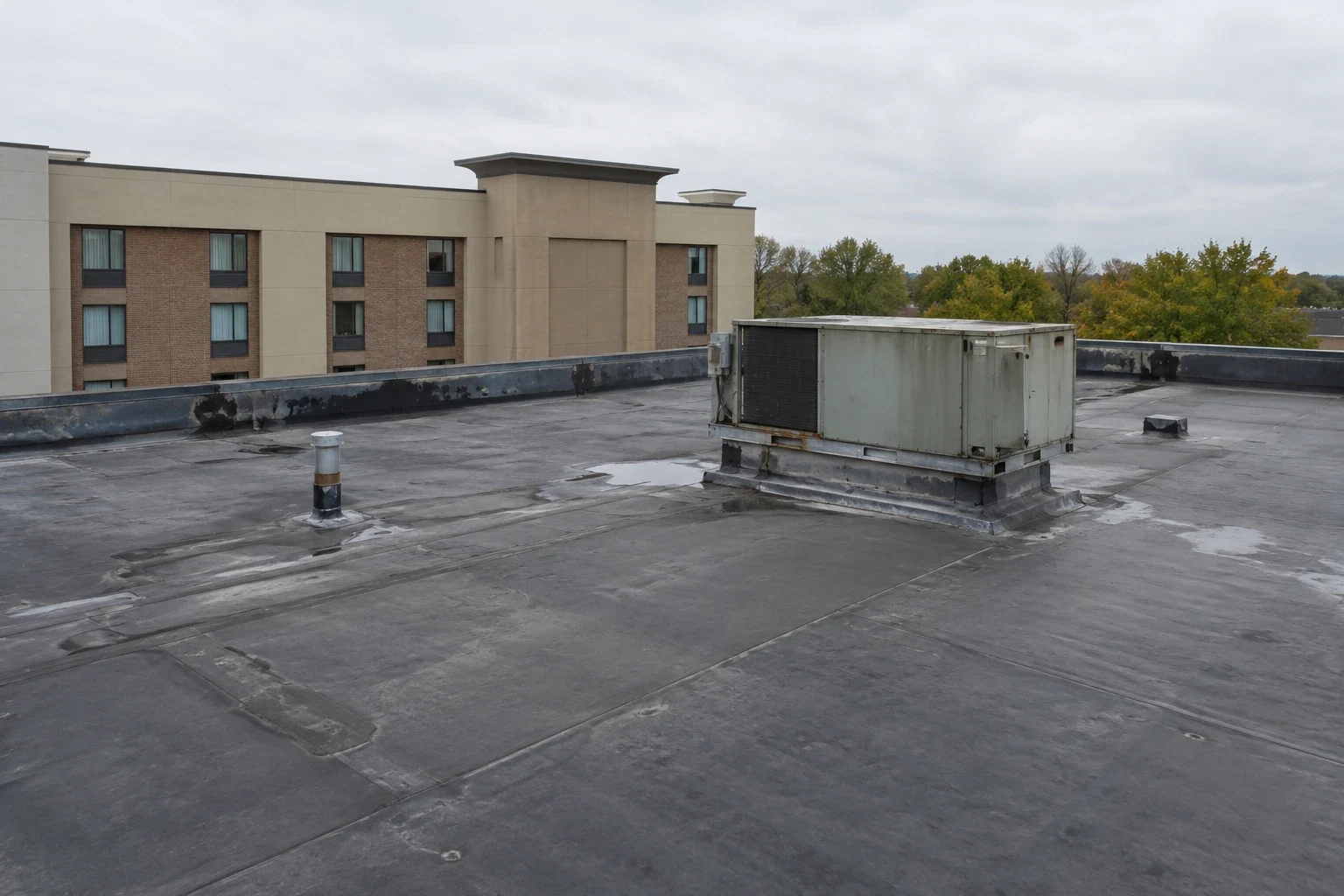
Warehouse use: protect loading and stored inventory
A roof leak over a receiving bay has a different consequence from one above a low-traffic storage aisle. We record the bay, aisle or mechanical zone below each observation, along with any equipment, inventory, or electrical area that needs protection. The warehouse contact confirms dock activity, forklift routes, security restrictions, and any hours when an overhead door cannot be blocked. This information shapes the crew path and temporary protection plan without being mistaken for evidence about the membrane itself.
Where operations run across more than one shift, we set a daily dry-in limit that leaves the roof protected before freight resumes. A lift, debris chute, or material pallet can narrow a truck turn or fire lane, so staging is checked at ground level as well as on the roof. Lynnway Park's combination of storage, processing, and warehouse uses makes it especially useful to keep each roof zone tied to the operation below, rather than describing a whole parcel as one uniform work area.
Observed condition: trace the opening and its limits
We follow a report from the interior location to the roof above and inspect the nearest seam, curb, wall transition, pipe boot, skylight, and drain path. Water can move along a deck or insulation joint before appearing below, so the first wet ceiling tile is recorded separately from a confirmed opening. We photograph the visible condition and note whether a patch, edge, or penetration may continue into an adjacent roof zone. A blocked or unsafe area remains marked as not inspected instead of being treated as sound.
Warehouse roofs often carry several equipment generations and repair layers. We check how the membrane meets curbs, support frames, parapets, and rooftop service paths, then note loose attachment, open flashing, punctures, or surface wear that can be seen. A drain and scupper review can define outlet work separately from membrane repair. If moisture extent or deck condition could change removal, we identify a test opening and what the result would answer. An infrared pattern can help choose a location, but the image does not by itself establish wet insulation. The record keeps tested findings distinct from suspected areas.
Local exposure: check edges, drainage, and winter water
Boston Logan's climate normals include 48.2 inches of annual snowfall and 44.52 inches of precipitation. For Lynn warehouses, snow, rain, and freeze-thaw make drain bowls, overflow routes, low areas, and perimeter transitions worth checking together. We map actual debris, ponding, ice-related movement, or drainage obstruction, and note how water is intended to leave the roof before recommending a correction.
Hurricane Sandy brought coastal flooding along the Massachusetts shoreline, with reported surge on the east coast and strong winds at Boston and Revere Beach. After severe weather near Lynn Harbor, we inspect edge and wall transitions for displaced metal, fresh punctures, loosened flashing, debris impact, and interior water evidence, then date each finding. A roof near port activity may have delivery and marine operations to coordinate while the inspection is arranged, so the access window is recorded alongside the condition log.
Scope comparison: repair the detail or renew the field
A local repair can fit when one seam, penetration, or edge detail is affected and nearby membrane and substrate remain serviceable. A distribution-center roof may have a different loading pattern, while a manufacturing plant may require a separate production window. We specify surface preparation, compatible materials, tie-in limits, and the roof zone that receives the repair. If similar failures recur or a test opening finds wet insulation, we compare a larger repair or replacement boundary. A warehouse roof repair should identify what is included and what remains untested, not imply that a patch changes conditions outside the photographed area.
Recover may be considered only when existing layers are dry, stable, attached, compatible, and permitted by the project requirements. We check edge height, drainage, deck condition, equipment transitions, and loading needs before adding material. A replacement scope can include tear-off, insulation, cover board, perimeter metal, drains, and phased dry-in. The assembly is compared against TPO or EPDM based on the building details, not the system name alone. Massachusetts commercial building and energy requirements apply to the project; the design and permit set determine the accepted assembly.
Access and sequence: set the daily dry-in line
Before mobilization, we identify the roof hatch or ladder, lift location, delivery route, material staging, and the person who can release each work zone. The warehouse lead confirms whether a dock, pedestrian path, refrigeration service route, or truck lane needs to remain clear. If another trade must move equipment or open a curb, we set an inspection hold point before the roofing detail is covered. These limits are placed beside the roof map so a superintendent can coordinate the crew without losing track of the repair boundary.
The crew opens only the area it can inspect, repair, and protect within the available weather and access window. If a shift ends before permanent work is complete, the file records the temporary tie-in, drains left open, and zone that needs a return check. Lynn Harbor and the Route 1A Lynnway/Carroll Parkway corridor support active regional movement; a property's actual truck and security rules still govern delivery timing. Send the roof plan, leak locations, work hours, and access contact to request a roof walk. The closeout file will show photos, materials, tested areas, exclusions, and the next action by zone.
Commercial Roofing Questions
What should a warehouse roof report show by loading area?
The report should pair each roof condition with the dock, aisle, equipment zone, or inventory area below it. We mark the visible defect, photograph its limits, and note any access restriction or test still needed. That gives the operations lead a usable boundary for protection and scheduling.
When is a test opening useful on a warehouse roof?
A test opening is useful when moisture or deck condition could change the repair or tear-off line. We select a location with the owner, record the layers and condition found, and state what adjacent areas remain unconfirmed. An image or surface stain alone does not establish the full extent.
Can roof work continue while loading stays active?
We phase around the receiving schedule when the roof layout and weather allow a secure daily dry-in. The site contact confirms truck paths, dock access, lifts, and sensitive areas before staging. Each shift has a defined boundary, and any temporary protection receives a documented follow-up check.
How do you compare repair with replacement for a warehouse?
We compare the same roof zones, including seam and flashing condition, drainage, attachment, test results, and operating constraints. A local repair may fit an isolated defect; repeated failures or broader moisture may support more removal. The closeout record states what evidence supports each option and what remains unknown.
Request a warehouse roof walk
Share the building use, loading or storage zones affected, known leak locations, roof access contact, and operating window. We will return a photo-supported condition log with repair boundaries and any test needs.
Back to Property Types We Roof.