
Grocery Store Roofing in Lynn, MA
Refrigeration, food preparation, receiving, and customer traffic make a grocery roof decision in Lynn, MA an operating issue as well as a membrane question. A drip above a sales aisle, prep room, or cold-storage area needs to be traced to its roof zone before the scope expands. We record the interior report, equipment paths, roof layers, drains, curbs, and prior repairs, then identify what is visible and what requires testing. A dated photo record helps the store manager protect food and equipment while comparing a local repair with a larger project.
Lynn’s commercial context includes Downtown retail and restaurants as well as food-processing and storage activity at Lynnway Park. Those uses frame operating questions for a grocery project, while the inspection establishes the store’s equipment, exhausts, intake locations, and access constraints. We confirm equipment, exhausts, intake locations, delivery routes, and access constraints at the property. Compare shopping-center roof planning or restaurant roofing needs with the specific service demands of a grocery building. A roof inspection provides the condition baseline.
Plan grocery roof repairs in Lynn around refrigeration, food operations, loading windows, leak isolation, and roof-zone evidence for phased work.
Food operations: contain water and protect the product
When water appears near food handling, refrigeration, electrical equipment, or storage, the store needs a prompt response and a clear record of the affected area. We identify the room, product zone, time observed, and immediate protection steps before following the roof path. On the roof, the review checks nearby drains, seams, penetrations, equipment supports, and previous repairs. A ceiling stain can show where moisture became visible, but it does not establish the roof entry point or the extent of wet insulation. The report keeps those questions separate.
An urgent grocery leak can be reported for roof response any hour of the day, all week and through holidays. A temporary water-control measure should be photographed, marked on the plan, and followed by a permanent review when conditions allow. Store staff can identify rooms with access restrictions, sanitation protocols, and equipment that must remain in service. We coordinate the roof work boundary with the site contact, then note which interior areas need continued monitoring. That record helps the manager distinguish an active response from a completed repair and communicate status to the people responsible for food safety.
Refrigeration equipment: map condensers and penetrations
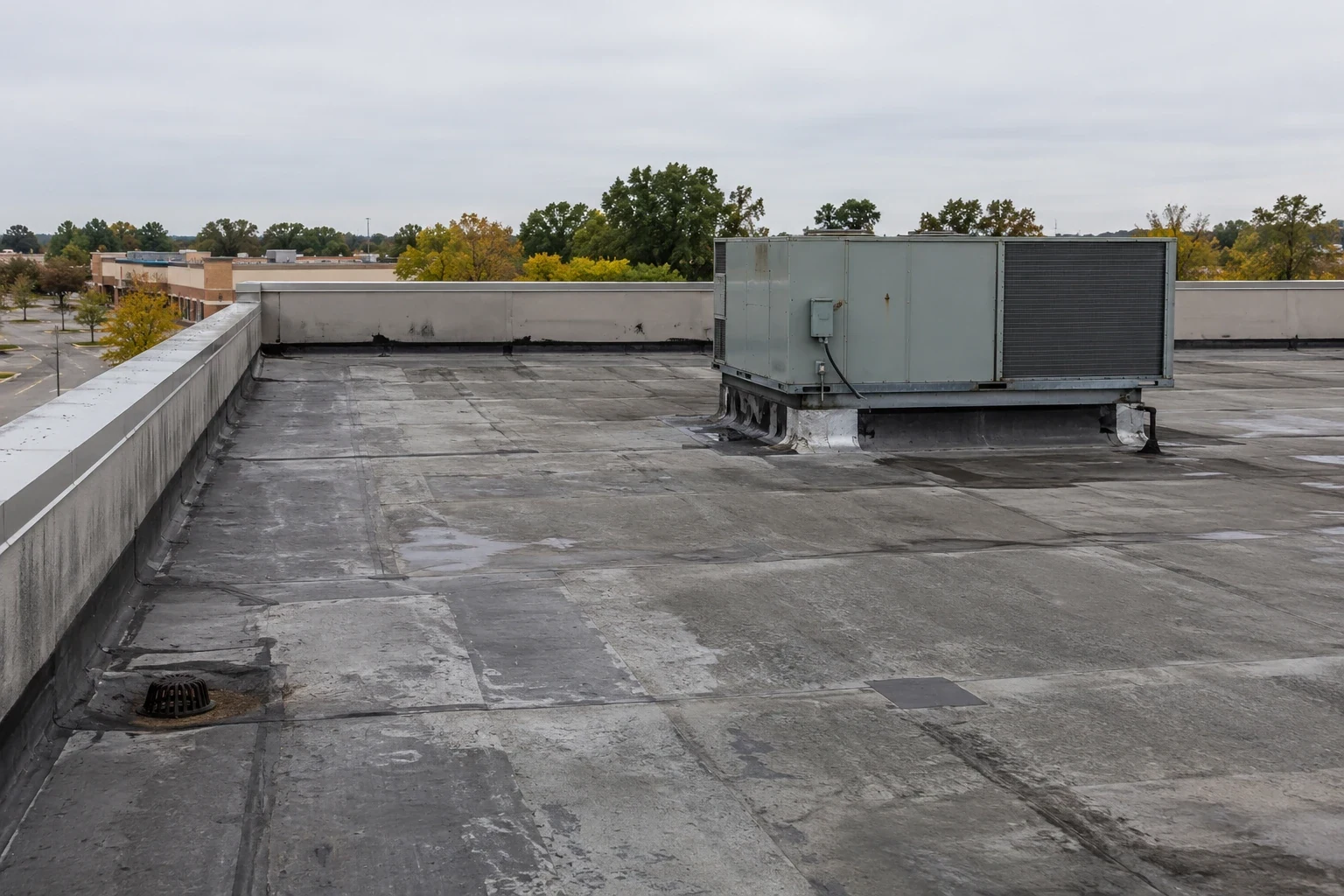
Roof-mounted refrigeration equipment, exhaust fans, pipes, and electrical connections create a network of curbs and penetrations that may be serviced by several trades. We photograph each interface and note sealant, flashing, membrane seams, vibration, condensate paths, and signs of later equipment work. A leak near a refrigeration line could originate at another transition or drain, so the inspection compares the interior report with surrounding roof details. Where hidden moisture or a multi-layer assembly changes the scope, use a targeted opening and state what it confirms.
Maintenance crews may need roof access during store operations. The schedule should identify service paths, lift access, equipment shutdown limits, and locations where materials cannot be stored. In Saugus, town planning places redevelopment priority on the center and supports commercial growth along Route 1. A grocery site still has its own receiving and refrigeration constraints, which we confirm with the building contact. A curb and support review can identify the roofing interface while leaving refrigeration-system work with the appropriate trade.
Drainage and weather: keep meltwater moving
For a grocery roof, start with how meltwater leaves the field: inspect drain bowls, scuppers, overflow paths, low spots, and the transitions around equipment. The Boston Logan station’s annual snowfall average is 48.2 inches, while annual precipitation averages 44.52 inches; a January mean low of 24.3 degrees and July mean high of 83.2 degrees add seasonal context. Log the observed flow path and any interior report, then check that replacement elevations keep drains and curbs coordinated.
After a reported storm, a grocery roof review should focus on evidence that could affect inventory protection or customer access: punctures, displaced edge metal, failed flashing, and active water entry. Massachusetts experienced coastal flooding during Sandy; southern New England storms can also bring damaging wind and hail measuring an inch or more. The event can prompt a walk-through, while roof-zone photographs establish the repair scope. A storm-damage inspection can document affected conditions, and a photo-based condition report can preserve the baseline for later comparison.
Scope and sequencing: preserve service during the work
A local repair may address a defined seam, flashing, or penetration issue when adjacent layers remain serviceable. Recover may be an option only after moisture, stability, compatibility, and project requirements are checked. Replacement gives access to concealed conditions and can reset insulation or drainage, but increases tear-off, debris, and temporary exposure. The comparison should describe what can remain in service, which roof zones need protection, and how much refrigeration or food preparation activity can continue during each phase. Do not make a sitewide recommendation from one leak report.
A large repair area can cross different departments, equipment feeds, or tenant functions even when it reads as one roof plane. Divide that area where operations or roof details change, and give the manager a simple plan showing which interior zones are protected each day. The site contact can then match the roofing status with refrigeration and receiving teams before the next shift begins.
Work timing can affect cost when deliveries, night stocking, refrigeration shutdowns, odor, noise, sanitation controls, or interior protection require a narrow window. For the proposed grocery scope, match the assembly to the Massachusetts commercial construction and energy rules governing the permit. A phased proposal should state each tie-in, daily dry-in, equipment interface, and owner approval point if wet insulation or damaged decking is uncovered. The owner can then compare an immediate repair with a planned assembly project using the same leak log and roof-zone map.
Closeout record: support store and facilities handoff
At closeout, provide a marked roof plan, dated photographs, repair materials, drains and flashing reviewed, equipment curbs addressed, and any concealed condition that altered the work. Tie the repair zone to the affected room when the path is supported by evidence. Label temporary work that remains and state the next action. The store manager can use that record to coordinate food-safety, facilities, and refrigeration follow-up without treating a temporary measure as permanent.
Maintenance staff can revisit drains, penetrations, prior patches, and rooftop service paths during later walks. Note roof areas that could not be accessed or opened, and preserve product information with the building file. If equipment is replaced or moved, update the roof record so new work does not obscure the original flashing and repair boundary. A precise closeout gives the next facilities contact a usable baseline and makes future scope comparisons more defensible.
Commercial Roofing Questions
What should happen when a grocery leak reaches a food area?
Protect the affected food and equipment under the store’s operating procedures, record the room and timing, and arrange a roof review. We map the report to nearby roof details and document temporary measures separately from permanent repair work.
Can roofing crews work while refrigeration stays on?
That depends on access to equipment and whether the planned work affects power, ventilation, or service routes. The scope should identify required shutdowns, protected paths, and who coordinates with refrigeration staff before work begins.
Does water below a rooftop condenser prove the curb is leaking?
No. The review should inspect the curb, pipe penetrations, seams, drains, condensate paths, and interior report before assigning the entry point. A test opening can help when the concealed assembly remains uncertain.
How can a grocery store limit disruption during replacement?
Divide the roof into workable zones, coordinate receiving and stocking periods, protect food and customer areas, and define the daily dry-in. The sequence must still respond to the actual roof condition and weather window.
What should the grocery facilities team provide for an inspection?
Send leak locations, refrigeration and exhaust access needs, receiving windows, roof plans if available, and the site contact. These details help set the inspection route and identify operational controls.
Arrange a grocery roof inspection
Share the store’s operating needs, leak zones, refrigeration access requirements, loading schedule, and site contact. We will document roof conditions and outline an appropriate repair or phased scope.
Back to Property Types We Roof.