
Commercial Rooftop Equipment Curbs and Supports in Lynn, MA
Food-processing and cold-storage uses at Lynnway Park make rooftop access and equipment coordination important, while marine-dependent operations around Lynn Harbor can have their own delivery windows. Those local uses do not tell us which units or supports are installed at a particular property. We inspect the actual curbs, frames, pipe supports, conduit, attachment, and flashing, then record the condition by roof zone so the owner can distinguish equipment work from membrane repair.
A rooftop unit transfers weight and movement through its supports into the building structure. The roof detail has a separate job: keep water out where the curb or support interrupts the membrane or metal. A complete scope checks both interfaces and identifies what needs structural or mechanical coordination before material is placed.
Inspect Lynn commercial rooftop curbs, pipe supports, and equipment flashing with load-path, water-entry, and access findings mapped by roof zone.
Check the Support Before Rebuilding the Flashing
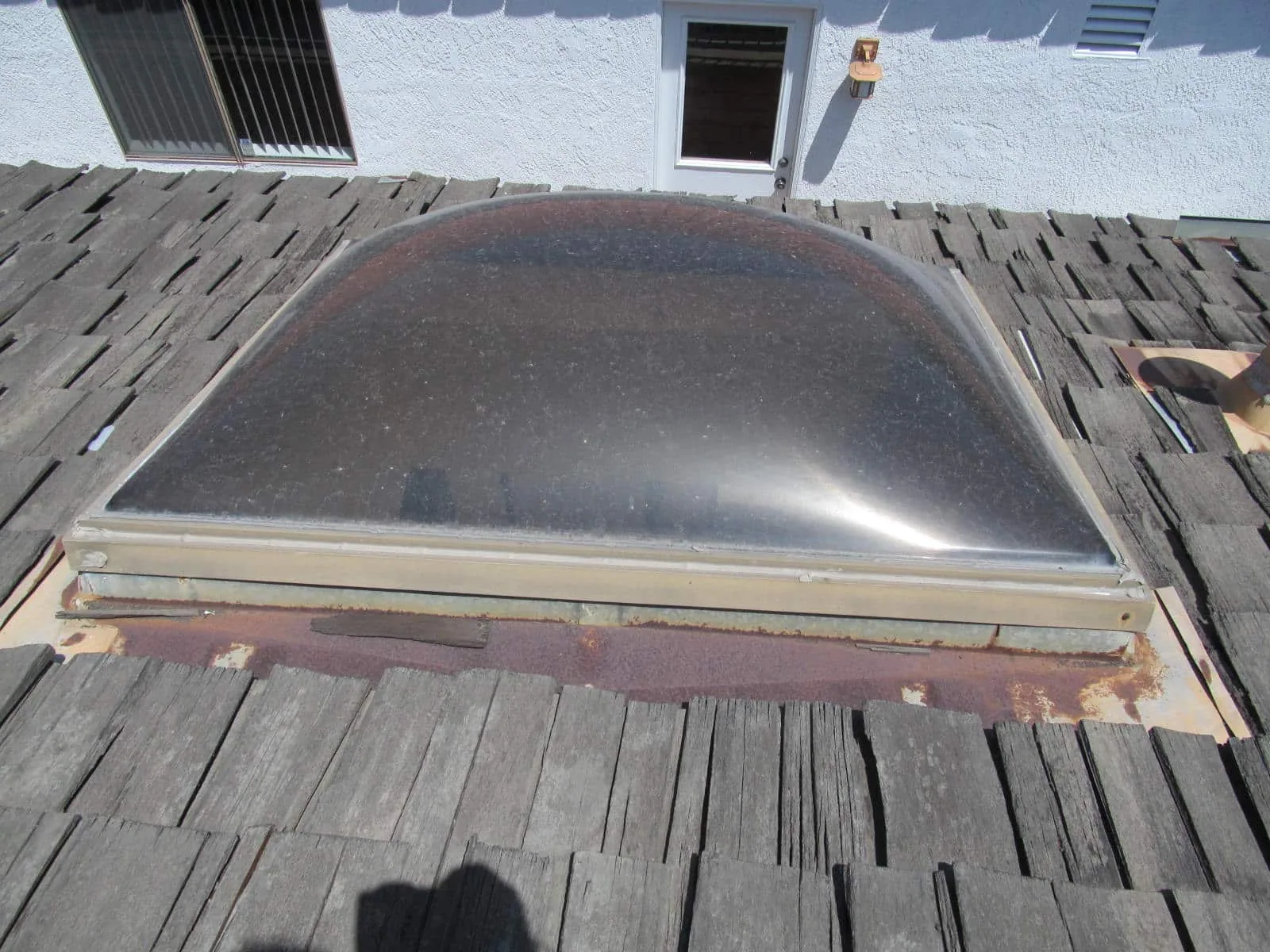
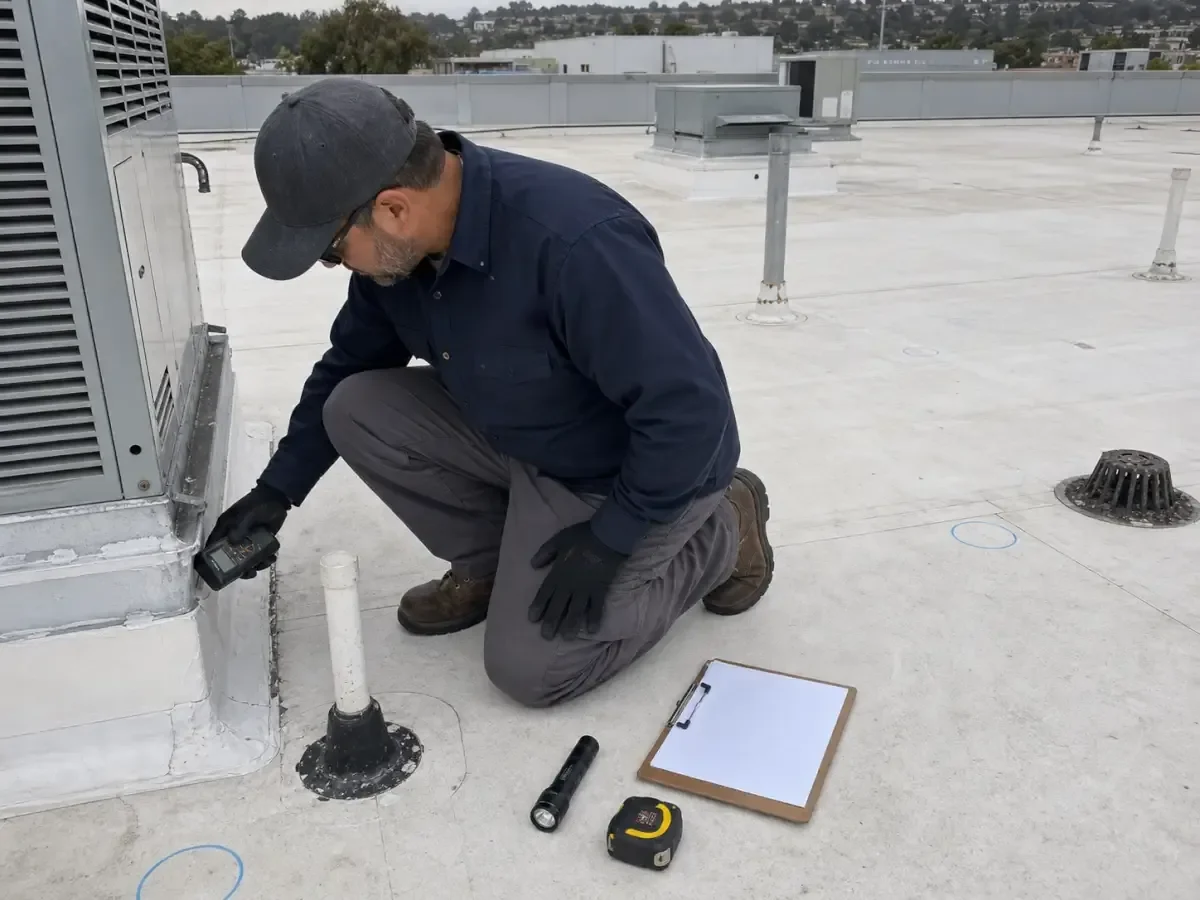
We examine the support base, attachment points, corrosion, deflection, vibration, loose fasteners, and any deformation visible from the roof. A support that has shifted can stress the membrane or pull at a curb corner. We photograph the frame and the surrounding surface, identify the equipment it serves when possible, and note whether a mechanical contractor must verify the load or adjustment.
Pipe supports need attention where lines rest on the roof or pass through a sleeve. We look for abrasion, missing separators, sharp contact, movement, and damage to the waterproofing. Conduit and cable routes are also reviewed for unsecured runs or later trade work that left a penetration exposed. We do not reposition operating equipment as part of a roofing repair unless that work is included and coordinated.
A roof inspection can create a photo record of supports, curbs, and the water path around them. If flashing is torn or a penetration has opened, a penetration repair scope can identify the compatible transition and the limit of membrane work.
Map the Curb and Roof Transition
At each curb we check corner seams, counterflashing, membrane height, fasteners, sealant, and the transition from vertical flashing to the roof field. A broad bead over a failed corner may only hide the opening. We locate the defect and determine whether the curb itself is sound, whether the flashing can be rebuilt, and whether adjacent membrane has enough sound material for a tie-in.
Low-slope roofs can hold water beside a curb when flow is obstructed or the surface has settled. We examine nearby drains, scuppers, crickets, and low areas before closing a repair. A drainage check can separate a blocked outlet from a ponding correction. The report records observed standing water and the date of the inspection instead of assuming how long it remained.
If a roof section contains multiple curbs or supports, we number them and track each condition separately. The crew can then match the repair quantity with the correct location rather than carry a generic allowance for all equipment details.
Account for Heat, Cold, and Salt-Side Weather
Boston Logan's July mean daily maximum is 83.2 degrees, while its January mean daily minimum is 24.3 degrees. Those nearby regional values frame summer heat and winter exposure, but the actual roof surface and weather window control the work. We check flashing flexibility, sealant condition, safe access, and whether selected materials can be installed under the conditions present on the visit.
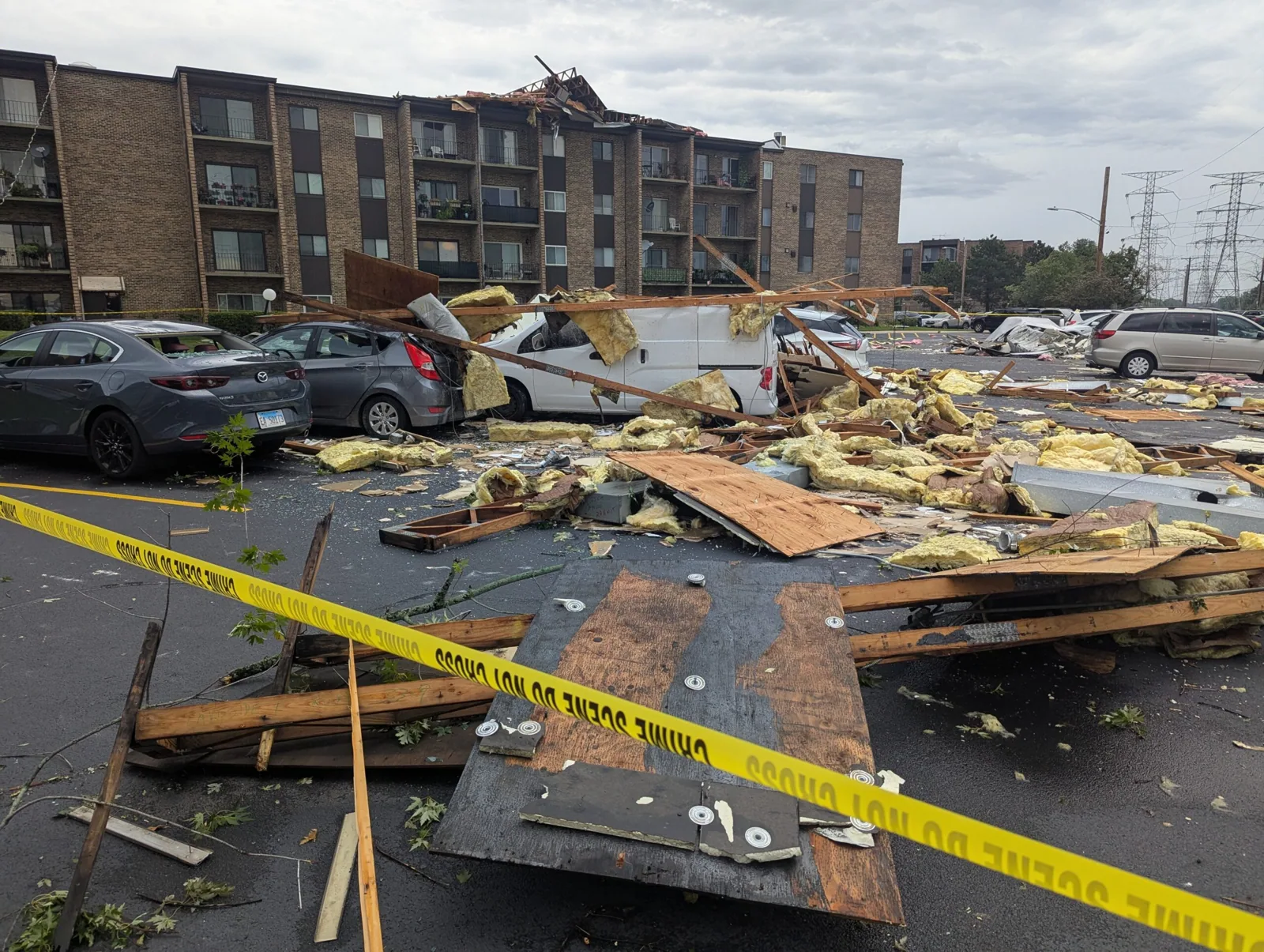
Hurricane Sandy brought coastal flooding along the Massachusetts shoreline, with strong winds recorded at Boston and Revere Beach. That history makes a post-event look at exposed curbs, equipment screens, and pipe supports reasonable, but it does not establish movement or corrosion at a Lynn Harbor building. We inspect for displaced metal, loosened attachment, torn flashing, and water entry at the property.
For work at Lynn Harbor, we confirm who controls access and when equipment can be approached safely. At a property in Saugus, we coordinate with its actual operations contact before setting a roof work window.
Separate Roofing Work from Mechanical Changes
The proposal identifies each curb or support, the flashing or membrane work, preparation, materials, access equipment, protection, and any condition that needs mechanical or structural confirmation. If a unit must be disconnected, lifted, or reset, that work is coordinated with the responsible trade and priced as a distinct activity. We do not treat equipment movement as an incidental roofing task.
Where the roof has a repeated leak around several units, we compare each detail rather than assume a single cause. A repair scope may address a confirmed opening; a replacement assessment can review how new curbs, penetrations, and membrane tie-ins fit a broader assembly project. The roof plan should show unit locations and the path service technicians use across the field.
Cost and timing reflect the number of details, access, safe equipment isolation, flashing height, adjacent membrane condition, and whether work must be sequenced around production or deliveries. The photo record shows completed tie-ins and any item deferred for another trade.
We also review the path a service technician takes to reach each unit. Repeated foot traffic can wear a walkway surface, scuff a membrane, or concentrate pressure near a curb. If the roof has protection pads, we inspect their placement and whether they keep clear of drains and flashing. The closeout can identify a separate walkway or support adjustment so a maintenance crew does not treat it as part of the curb repair.
Keep Equipment Changes in the Roof Record
After repair, the closeout file includes dated photos, curb or support identifier, materials used, completed area, and any remaining action. If an equipment contractor plans a later change, the record shows where the roof must be protected and inspected after the work. That helps keep a new opening from being mistaken for a previously repaired condition.
For a building with multiple roof zones, the assembly record should note which supports were inspected and which could not be reached. A photo condition report can keep those details alongside leak history and follow-up recommendations. At a downtown property or a marine-commercial site, the same roof record can support different access plans without blending building conditions.
Send the equipment list, roof plan, leak history, access contact, and schedule constraints. We will inspect the support and flashing interfaces and return a mapped scope with the repair boundary and any required trade coordination.
Follow-up photos can then confirm whether the condition has changed. Take the next view from a comparable angle and include the curb corner, adjacent seam, and repair edge, so a facility manager can distinguish new movement from a different camera position. Keep that comparison with the equipment identifier and date.
Commercial Roofing Questions
Does a curb repair include moving the rooftop unit?
Not by default. We inspect the support and flashing, then identify whether mechanical disconnection or equipment movement is required. That work is coordinated and scoped with the responsible trade.
How do you tell whether the unit support caused a leak?
We check attachment, movement, flashing, curb corners, nearby seams, and the reported interior water path. If the visible evidence does not confirm the entry point, we document the test or opening needed.
Can pipe supports damage a roof membrane?
They can abrade or compress a surface if the support shifts, lacks separation, or bears on the roof incorrectly. We record the contact point and coordinate changes that affect the line or its support.
What if the curb is sound but flashing is split?
We can scope a flashing rebuild when the curb and surrounding assembly accept a reliable tie-in. The proposal identifies preparation, compatible material, and the area included.
Should equipment be inspected after a coastal storm?
A reported event is a reason to inspect exposed supports, screens, fasteners, and flashing. Regional storm history does not confirm damage; we record only conditions found at the property.
Request a Rooftop Equipment Detail Walk
Send the building use, equipment list, affected roof zone, leak history, access contact, and schedule window. We will inspect support and flashing conditions and return a photo-backed scope.
Back to Commercial Roofing Services.