
Commercial Skylight and Penetration Flashing in Lynn, MA
A skylight or pipe opening interrupts the roof field and leaves a detail that must stay sealed as the assembly moves. Lynnway Park includes food-processing, storage, and cold-storage operations, so roof access and interior protection need to be coordinated with the property contact. Downtown Lynn's cultural district brings retail, galleries, and event uses where public access can shape the work window. We inspect each curb and penetration directly rather than infer a roof condition from its use.
A water stain below a skylight may begin at the curb, glazing frame, adjacent seam, or a separate roof transition. We trace the reported path, photograph the components, and mark what is visible, what has been repaired before, and what requires opening. The repair boundary follows the confirmed detail and extends only when the surrounding material supports it.
Repair Lynn commercial skylight and penetration flashing with curb, seam, and water-path checks documented by roof zone and photo record.
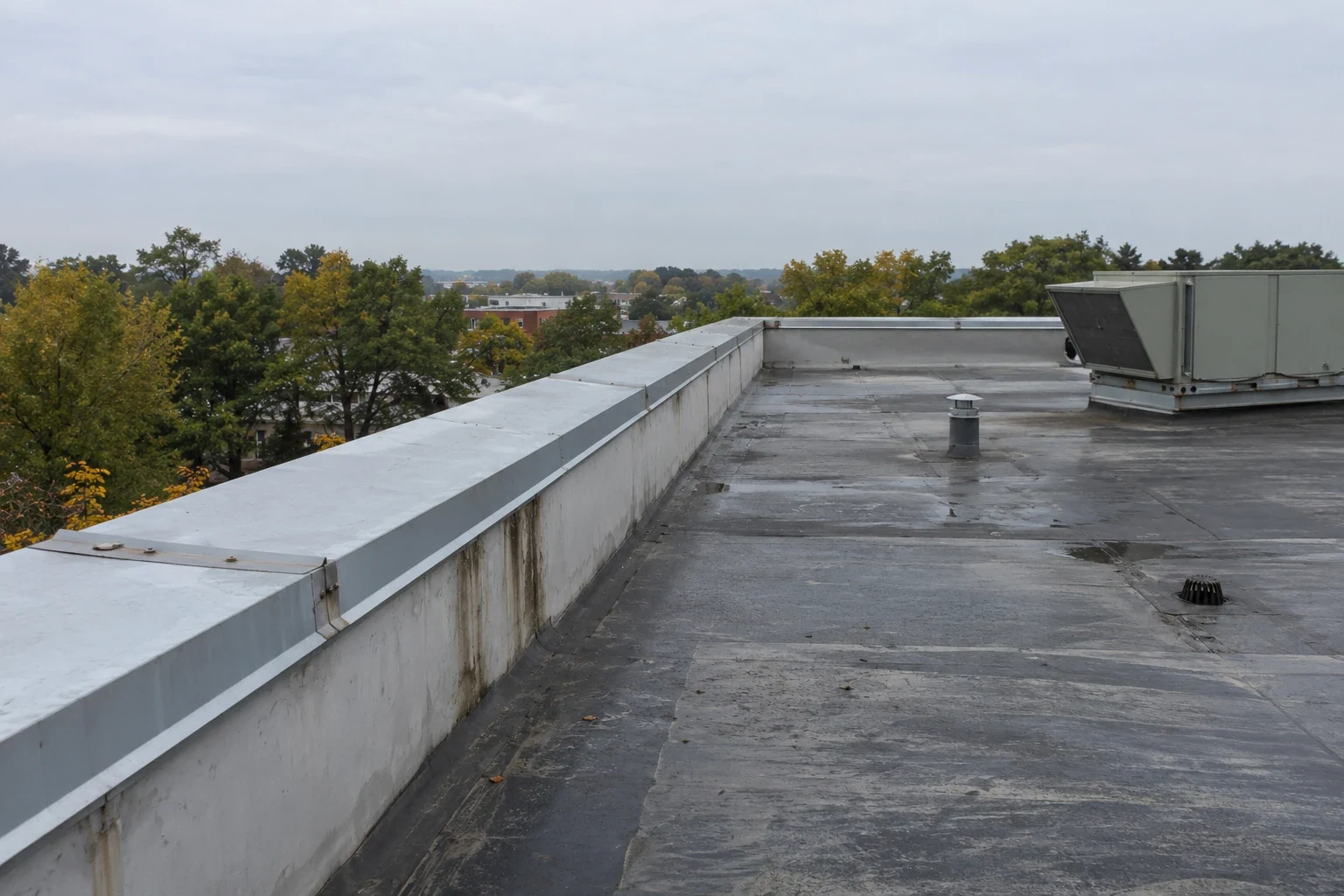
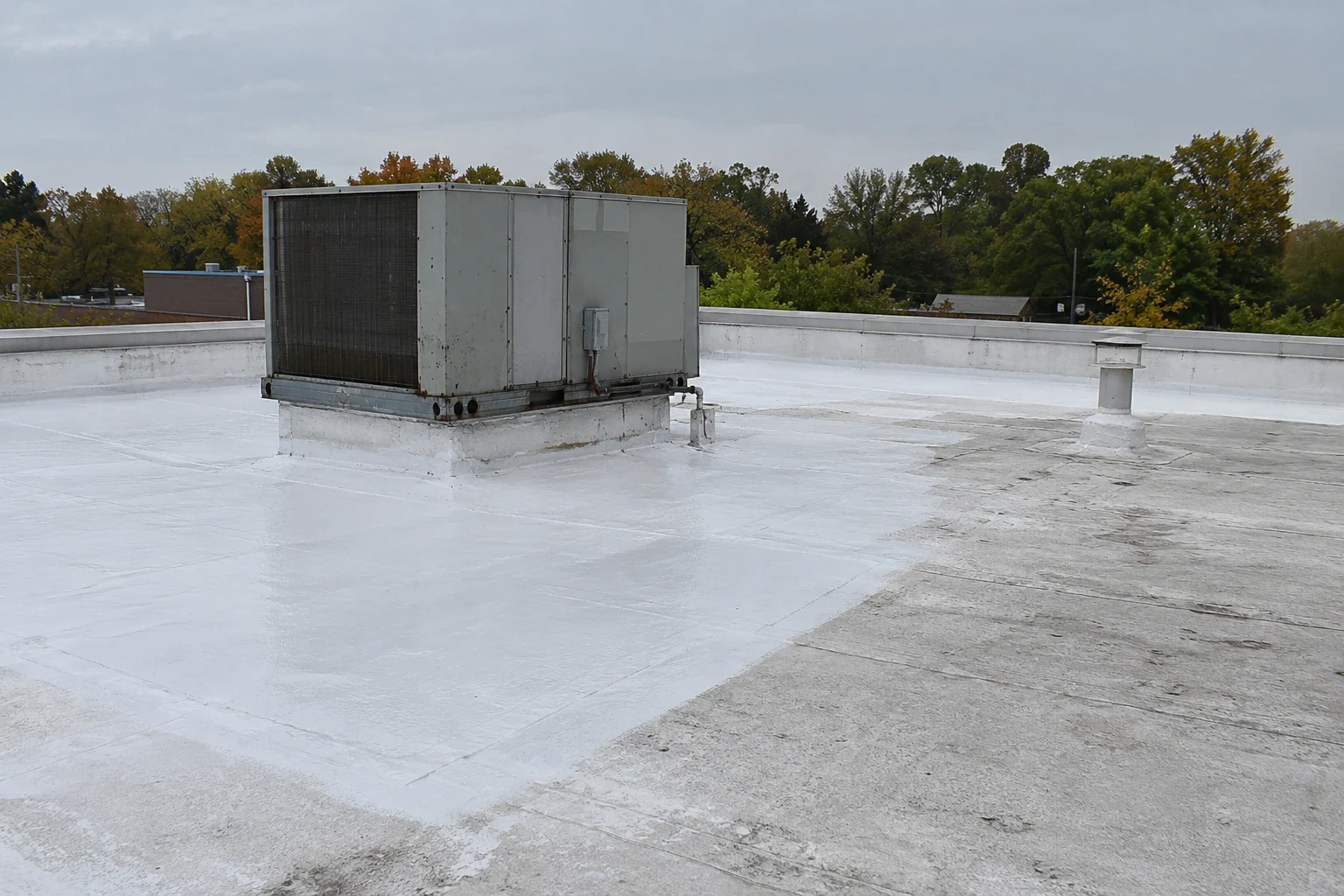
Inspect the Curb Before Replacing Sealant
A bead of sealant is not a substitute for a sound curb and flashing transition. We check curb corners, height changes, membrane turn-ups, metal counterflashing, glazing frames, fasteners, and the connection to the roof field. We look for separated joints, cracked sealant, corrosion, loose metal, and evidence of water below the detail. Photos include the nearby surface so the owner can see whether a defect is local or part of a wider seam condition.
For pipe, conduit, vent, and equipment penetrations, we identify the boot, clamp, pitch pocket, curb, or other installed detail. We check whether the penetration moves, whether flashing is split or unsupported, and whether a later trade cut the membrane. We do not assume the building has a particular assembly; submittals and visible conditions are compared before we select compatible repair material.
A commercial roof inspection can map skylights, curbs, and openings by roof zone. When an active leak needs a separate water-path review, a leak investigation compares the interior location with the roof detail and nearby transitions.
Distinguish Glazing from Roof Membrane Failure
Water can enter through a glazing gasket, a curb corner, a loose counterflashing, or the roof surface beside the skylight. We inspect the frame and curb, then the membrane or metal around it, and note whether the reported leak follows rainfall direction, wind, or a specific operation. If more than one entry point is plausible, the report says so rather than assigning cause from the stain alone.
At Boston Logan, the long-term annual totals are 44.52 inches of precipitation and 48.2 inches of snow. That water load makes the curb, nearby drain path, and return flashing important inspection points. Rain and snow make curb height, drainage, and safe access worth reviewing; the actual opening and surrounding water path determine the repair.
We check the nearby drains, low areas, and crickets because standing water or redirected flow can load a curb transition. When the defect is limited to a drain connection, a drainage scope keeps it separate from skylight flashing. If the opening itself has failed, we list repair or replacement of its curb or frame as a distinct item.
Review Fasteners and Flashing After Wind
Coastal wind can make an exposed curb or frame worth a closer look after a reported event. Hurricane Sandy brought flooding along the Massachusetts shoreline, while Boston and Revere Beach recorded strong winds during the storm. After a reported event, we inspect the skylight frame, curb, flashing, and adjacent membrane and record movement or openings found. We look for moved covers, broken glazing, displaced counterflashing, lifted membrane, and new water entry at the building.
At the Lynn Harbor Port Area, work scheduling may require coordination with the site's access contact. A property near Saugus may have different operating windows because of its current use. We confirm where the work area sits and whether equipment, deliveries, or the space below needs protection before opening the detail.
Where metal or membrane moved at the curb, a wind-related repair can document the affected edges and tie-in. We keep new damage distinct from brittle sealant, an older patch, or a pre-existing frame condition when the observations support that separation.
Choose a Repair That Reaches Sound Material
A small split boot or isolated curb-corner gap may be repairable if adjacent flashing and membrane remain sound. If the curb is corroded, glazing is damaged, or the surrounding assembly is wet, a surface patch may not solve the entry path. We identify what can be repaired, what requires replacement, and what cannot be confirmed without opening.
The estimate identifies the opening, roof zone, flashing material, surface preparation, curb or frame work, sealant or reinforcement, access, protection below, and closeout photos. If a skylight must be removed to repair the curb, we note the sequencing and weather-tight point. A roof repair proposal can keep that detail separate from a broader renewal scope.
Where multiple openings show the same failure, we compare the repair boundary across them rather than assume one detail represents the whole building. On an occupied property, a controlled work sequence can limit interior exposure and protect public or production areas below.
We also distinguish a damaged glazing unit from a failed roof-to-curb connection. Replacing the glass may not correct a leaking flashing transition, while rebuilding the curb does not address a cracked frame. The inspection lists the component that failed and any connected work needed to restore a continuous water-shedding path.
Keep the Opening in the Maintenance Log
Closeout photos should show the curb corners, frame connection, completed flashing, and adjacent roof surface. We include material information, work date, roof zone, and any limitation that remains. If the owner later replaces a skylight or adds equipment, the record shows the detail that must be coordinated before the roof is closed again.
Routine inspection can revisit sealant, fasteners, flashing transitions, and the surface around each curb. A maintenance program can keep opening-specific findings beside other repairs. Downtown Lynn and Lynn Harbor have different property contexts, but both require a roof record tied to the actual structure, not a general location description.
Send the building use, leak location, opening list, roof history, access contact, and work window. We will inspect the curb or penetration, map the water path, and return a repair scope with the remaining question stated clearly.
A dated photo makes that distinction easier to carry into later capital planning and budgeting.
Commercial Roofing Questions
Can new sealant fix a leaking skylight curb?
It may help only if the curb, flashing, and surrounding surface are sound and the leak is limited to a compatible joint. We inspect the frame, corners, and roof tie-in before defining the repair.
How do you tell a skylight leak from nearby membrane failure?
We compare the interior report with glazing, curb transitions, nearby seams, drains, and any earlier patch. If the evidence leaves two plausible paths, we document that limit and identify what test could separate them.
Do you inspect pipe and equipment penetrations too?
Yes. We record boots, curbs, clamps, pitch pockets, and flashing that are present, including details added by later trades. The repair uses material compatible with the existing assembly.
What if the curb is concealed or too damaged to inspect?
We note the access limit and propose the opening or removal needed to confirm the substrate. The final repair quantity may change once concealed conditions are visible.
Should every skylight be replaced during a roof project?
No. We assess the frame, glazing, curb, flashing, and expected service needs. The scope can retain a sound opening, repair its transition, or list replacement if the inspection supports it.
Request a Lynn Skylight and Penetration Review
Share the building use, reported leak location, roof records, opening list, access contact, and work window. We will map the detail and return a photo-supported repair scope.
Back to Commercial Roofing Services.