
Commercial Roofing for Insurance and Restoration Work in Lynn, MA
A restoration file needs a dated roof finding that can be compared with the reported event and the condition before it. For commercial properties in Lynn, MA, we record the affected roof zone, visible damage, prior repairs, temporary protection, and areas that remain untested. Hurricane Sandy brought coastal flooding along the Massachusetts shoreline with strong regional winds, and severe thunderstorms in southern New England can produce damaging winds and hail. That history makes a careful post-event inspection useful, but an event does not establish damage at a specific building. Storm damage roof work should begin with the current property condition.
Commercial Roofing Lynn documents storm-related roof conditions, temporary protection, repair boundaries, and restoration work for Lynn commercial properties.

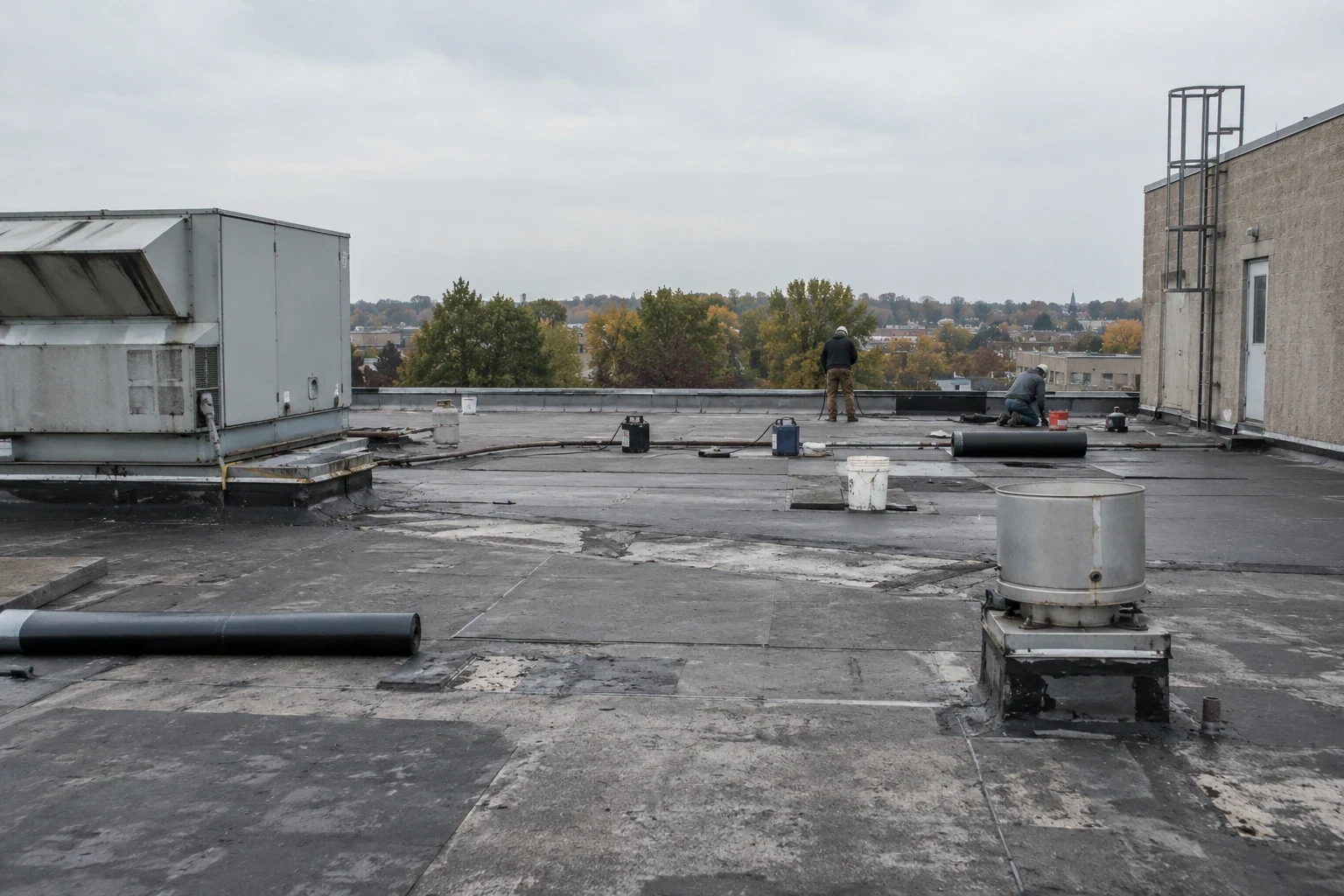
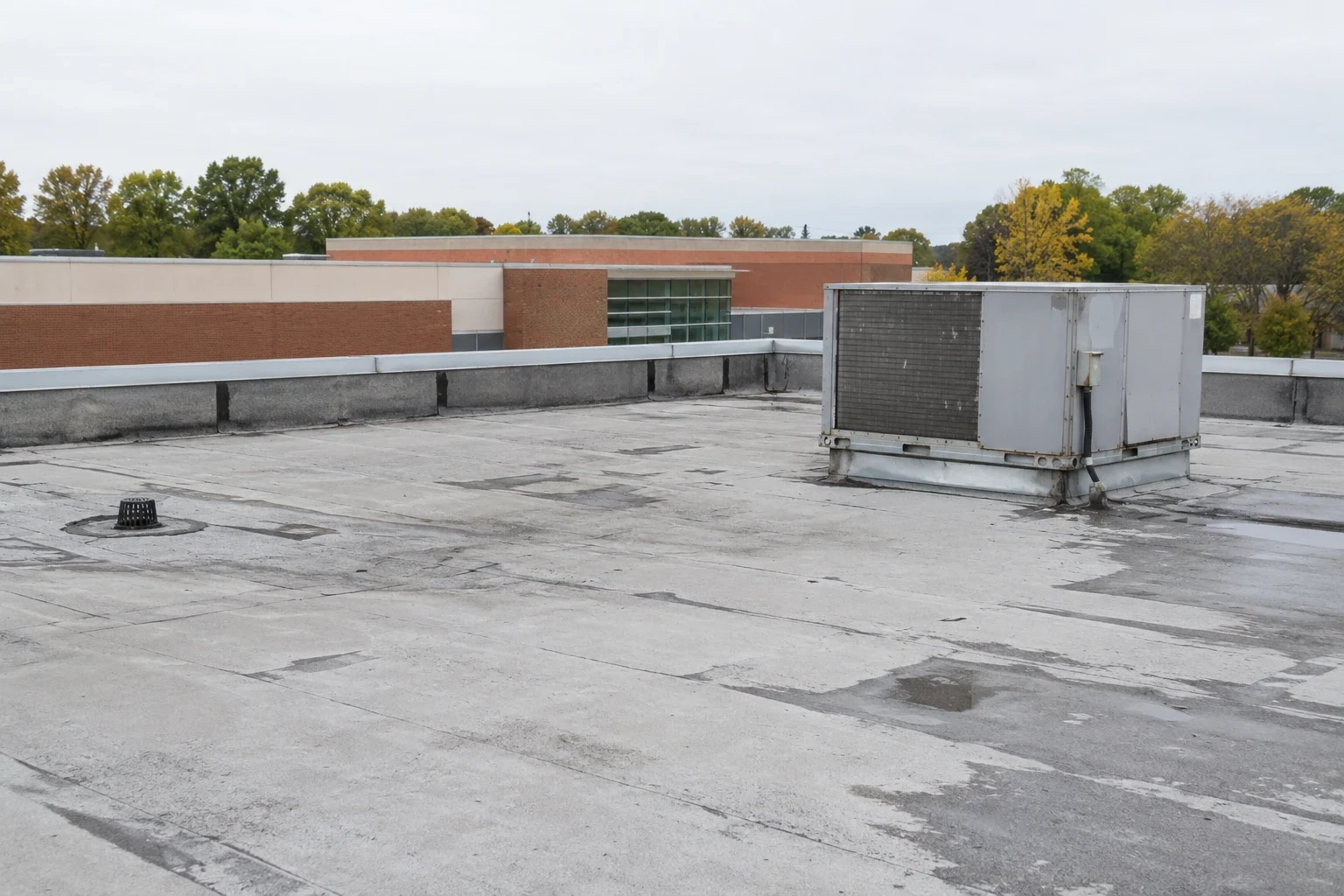
Event record: capture timing and the first roof condition
We begin with the reported date and time, weather description, interior observations, and any immediate protection already installed. On the roof, we photograph the affected area and nearby seams, edge metal, penetrations, drains, and previous repair patches. Each image needs a roof-zone reference and a note about access or visibility. We distinguish a fresh tear, displaced component, or puncture from older wear and maintenance items without making a coverage decision. Claim documentation support can preserve that distinction in a file the owner and adjuster can review.
If rain is entering, we can install temporary protection that limits further exposure while the permanent scope is determined. The record should state what was protected, where, and when a follow-up inspection is needed. Temporary measures should not be described as a permanent repair or as proof that all water entry has stopped; the next inspection verifies the roof condition after the area is safe to access.
When a restoration contractor is coordinating temporary work, the roofing record should identify who installed the protection, what material covers the opening, what condition it protects, and who will return to inspect or remove it. The adjuster and owner can then compare the temporary measure with the permanent repair estimate without confusing emergency mitigation with finished work. General contractor coordination can clarify the handoff where multiple trades are already on site, while property management staff can retain the dated file for ongoing service.
Roof inspection: separate event damage from older conditions
A roof can carry more than one condition at once. We map the reported area, compare it with the rest of the assembly, and look at seams, flashings, curbs, drains, perimeter attachment, and prior patches. Water may travel before it reaches a ceiling, so the interior mark is not conclusive by itself. When moisture might extend below the membrane, a test opening or moisture survey can establish whether insulation or deck material is affected. The report says what is visible, what was tested, and what remains uncertain.
Lynn’s North Shore climate brings year-round precipitation, winter snow and cold, and summer heat. Those conditions support review of drainage and freeze-thaw details, but climate is not proof of a cause. We use the building's dated reports and inspection observations to determine what conditions were present during the visit. Wind damage inspection can document edge and membrane findings after a severe wind report without assigning unrelated maintenance to that event.
Where a storm report covers a large property, we can map roof sections separately and note any area that could not be accessed during the first visit. That prevents a visible damaged detail from being treated as a complete survey of the roof. A follow-up visit can test the outstanding area when it is safe and dry enough, then update the condition record before the permanent scope is closed.
Repair estimate: state the boundary and unresolved work
A restoration estimate should name the affected roof zones, materials assumed, repair area, temporary protection, access requirements, exclusions, and any concealed condition that needs a separate test. If the observed quantity changes after opening the assembly, the change should be photographed and explained before additional work proceeds. We describe the roofing work and its limits; policy interpretation and claim coverage remain with the insurer and policyholder. Leak investigation can identify the water path, while a repair scope defines the permanent work after conditions are established.
For an occupied building, the estimate should also identify how a crew reaches the roof, where temporary materials are staged, what entries stay open, and when the active section is closed for the day. Lynnway Park includes food-processing, storage, and cold-storage uses, while Downtown Lynn includes retail, restaurants, events, and galleries. These local uses show why access can differ from one property to another; they do not tell us how a particular building operates. We confirm the actual constraints with the manager.
For a claim file, we can preserve a copy of the initial inspection and the later repair closeout under the same roof-zone labels. If the owner receives additional interior reports, those dates can be added to the timeline without changing what the original roof walk found. This keeps the chronology legible and lets the next reviewer see whether new symptoms correspond to a repaired area or require a separate inspection.
Restoration closeout: preserve work and follow-up evidence
At completion, we return dated photos, repaired locations, installed materials, temporary measures removed or left in place, and any conditions outside the approved repair. The closeout file should make it possible to distinguish what the roofing contractor did from what remains for other trades or a later phase. If the repair could affect a warranty, we include the applicable system documentation and maintenance requirements provided for the assembly. A condition report preserves the roof-zone history, and warranty coordination can keep applicable documents connected with future service.
Where restoration work follows a coastal event, Lynn Harbor's designated port status and the Route 1A Lynnway corridor are local context for access and exposure discussions. They do not establish storm impact at a project site. We keep the building-specific evidence, event dates, and repair scope together so the owner can compare the first inspection with later follow-up, including any area that was inaccessible or concealed at the initial visit.
Commercial Roofing Questions
Can you say whether a roof condition is covered by insurance?
We document the roof condition, reported timing, temporary work, and repair scope, but the insurer and policyholder determine coverage under the policy. Our report can distinguish visible damage from pre-existing wear or an untested area so that review has a clear factual basis.
What should be photographed after a storm?
Photograph the affected roof zone, surrounding details, interior symptoms, temporary protection, and any prior repair area that helps explain the current condition. Each image should have a date and location reference so the adjuster or owner can compare it with later work.
Can emergency protection be installed before an adjuster visit?
If water is entering or an opening creates exposure, temporary protection may be needed to limit additional damage. We document the condition before and after the protective work when access allows, then identify what remains for a permanent repair.
How do you handle damage that is hidden below the membrane?
We identify the visible limits and recommend an appropriate test opening or survey when the underlying material cannot be assessed from the surface. If testing changes the scope, we record the finding and proposed work for review before extending the approved repair.
What should the property owner keep after restoration?
Keep the event date, initial condition photographs, temporary protection details, approved estimate, final work photos, materials, and follow-up recommendations together. A consistent roof-zone map makes later maintenance or a repeat event easier to compare.
Request a Lynn post-event roof inspection
Send the reported event date, affected area, interior observations, access contact, and any temporary work already completed. We will document the roof condition and repair boundary.
Back to Industries We Serve.