
Carlisle SynTec Roofing in Lynn, MA
A Carlisle SynTec specification on a Lynn commercial roof still has to answer a building question: what is installed now, where is it failing, and what operation sits below the work zone? We record membrane type, attachment, seam condition, curbs, drains, and perimeter transitions by roof zone before comparing a repair, recover, or replacement. Carlisle offers systems including Sure-Weld TPO and Sure-Seal EPDM, with PVC products also in its commercial portfolio. The product family narrows the options; the assembly record and observed condition determine what belongs in a scope. For a second membrane comparison, review how GAF commercial systems fit the same roof-zone record.
The listed uses at Lynnway Park include storage, light industry, food processing, and warehouse space; each operator may have its own staging restriction even where two roofs share a membrane. Lynn Harbor's marine-dependent activity makes delivery timing and perimeter exposure relevant to a roof walk, while Downtown Lynn brings occupied commercial properties with tighter pedestrian and service access. Our commercial roof inspection ties each photographed condition to a location on the roof plan, giving an owner a way to separate evidence from assumptions before a manufacturer name becomes a decision.
Review Carlisle SynTec TPO, EPDM, and PVC options for Lynn commercial roofs with a documented look at seams, transitions, drainage, access, and scope.
Building use: keep the assembly tied to the operation
A distribution building may have long, open roof areas and frequent equipment service paths, while a medical office or restaurant needs quiet access around patients, staff, deliveries, and operating hours. Those uses matter when selecting an access window and dividing the roof into work zones. Before we compare Carlisle membranes, we log rooftop equipment, drain locations, penetrations, occupied rooms below, and the route used to reach each area. In a multi-tenant building, that record also identifies who can authorize access and which temporary protections must remain in place.
The Lynn Harbor Port Area supports marine-dependent industrial and commercial activity, and the Lynnway corridor carries regional movement. These are useful planning contexts, not proof of a particular property's roof construction. We confirm actual laydown space, loading restrictions, security steps, and delivery timing with the site contact. A Lynn Harbor roof scope can then state whether material staging conflicts with active operations and how the crew will keep a defined path clear. If the property is occupied, phased work in an occupied building should include a daily limit and a reliable dry-in plan.
Membrane and seams: define what the inspection found
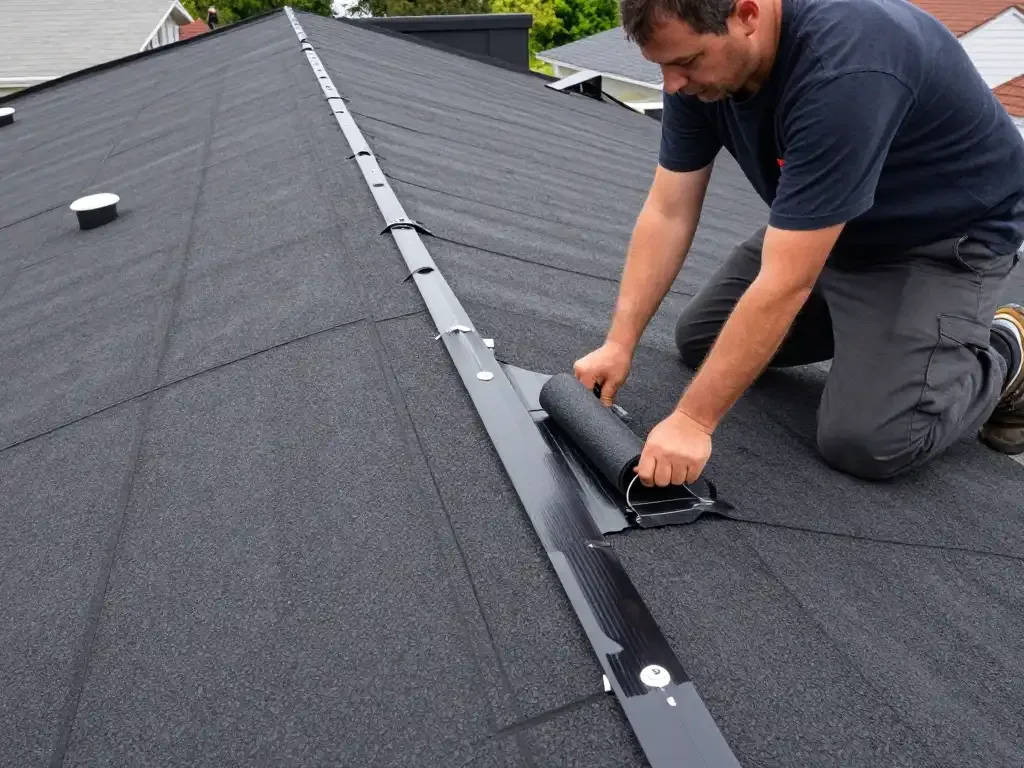
Sure-Weld TPO uses heat-welded seams; Sure-Seal EPDM relies on its own seam and flashing details. Inspection notes should identify the actual membrane before recommending a repair material, because a generic patch description can conceal a compatibility problem. We photograph open or irregular seams, cuts, surface wear, prior patches, loose edge details, and movement where the roof meets a wall or curb. Each image receives a roof-zone reference and date. A stain inside may point toward an area to inspect, but it does not by itself locate the opening above.
Where concealed insulation or deck condition could change the repair boundary, a targeted test opening can show the layers and material condition at that spot. We record what was opened, what was observed, and what remains untested nearby. An infrared pattern can help choose a test location, but it is not a substitute for confirming wet material. A zone-based report keeps measured findings and suspected areas distinct, which matters when an owner compares a limited repair with a wider replacement. For a different manufacturer portfolio, Johns Manville roofing systems can be assessed against the same substrate and transition conditions. We do not extend a finding beyond the roof zone that supports it.
Exposure: inspect edges, drains, and transitions together
Lynn's regional weather brings close to forty-five inches of rain and roughly four feet of snow each year. The useful roof questions are where rain and meltwater travel and which access details remain usable in winter; the site inspection establishes the actual conditions. We trace the path from field membrane toward drains and scuppers, then photograph low areas, overflow routes, curb bases, and perimeter metal. The scope identifies an actual obstruction or damaged transition instead of treating seasonal weather as a diagnosis.
Hurricane Sandy brought coastal flooding and strong winds to parts of the Massachusetts shoreline. Lynn's harbor setting makes it sensible to inspect edge securement and wall flashing after severe weather, while still requiring direct evidence before assigning damage. We note displaced metal, punctures, fresh seam separation, debris impact, or interior water reports by zone. Cliftondale Square includes commercial and public uses, so a Saugus roof walk should confirm entrances, delivery timing, and staging limits with the property contact. A drain-focused scupper and drain review should show how water is meant to exit and which observed condition interrupts that route.
Scope comparison: repair, recover, or replace
A repair can fit an isolated seam, flashing, or puncture issue when surrounding membrane and substrate remain serviceable. The work description should name the preparation, compatible materials, affected zone, and limit of the repair, then identify nearby conditions that were not opened. If the same detail has failed repeatedly or test findings show broader moisture, we compare a larger repair boundary with replacement. A commercial repair scope needs enough detail for the owner to know what is included and what evidence would change the recommendation.
Recover is a separate option only when the existing assembly is dry, stable, attached, compatible, and allowed by project requirements. We review layer count, deck, edge height, drainage, attachment, and transitions before proposing new Carlisle material above an existing roof. Replacement may allow the team to address insulation, cover board, drains, and perimeter details together, but it brings tear-off, debris, and a longer period of exposure. A recover-versus-tear-off comparison should list the assumptions and test results behind each option. Carlisle's product label alone cannot settle concealed conditions or code review.
Access and sequencing: set a protected daily boundary
Before work, we confirm roof access, lift placement, material drop, pedestrian controls, equipment shutdowns, and the person authorized to release a zone. At an active Lynnway warehouse, a delivery lane or refrigeration service route may need to remain available; Downtown Lynn storefronts can require a different path around entrances and public sidewalks. The plan records those actual constraints with the roof map rather than treating an entire property as one open work area. If another trade must move equipment or open a curb, that step is listed before the roofing crew closes the detail.
Each shift should end with the opened area protected against weather, drains kept functional, and the temporary tie-in identified for the next inspection. Photos capture substrate condition, seam work, flashings, perimeter metal, and any concealed condition that changed the scope. The closeout file lists installed system components, repairs, exclusions, and follow-up items without suggesting that a membrane removes future maintenance needs. Send the building use, known leak zones, access contact, and schedule window to request a roof walk; we can return a photo-supported scope comparison for the owner or general contractor.
Commercial Roofing Questions
How do Sure-Weld TPO and Sure-Seal EPDM differ on a project?
They are distinct membrane systems with different seam, flashing, and installation details. We first identify the existing assembly and the project requirements, then compare the proposed membrane, attachment, insulation, transitions, and documented maintenance plan. A product name does not establish whether an overlay or replacement is suitable.
Can Carlisle material be used to repair a roof from another manufacturer?
Compatibility depends on the existing membrane, repair product, surface condition, and manufacturer's system requirements. We identify what is installed, inspect the repair area, and state which materials are proposed. If the assembly cannot be confirmed from visible conditions, a test area or additional documentation may be needed before the repair boundary is set.
What should a Lynn owner expect in a Carlisle roof comparison?
The comparison should connect the observed roof zones to a defined scope: seam and flashing findings, drains, edge details, test results, access constraints, and areas left untested. We can separate a limited repair from recover and tear-off alternatives so operating impacts and concealed-condition allowances are visible before approval.
Does coastal exposure mean a Carlisle roof needs replacement?
No. The Lynn Harbor setting makes perimeter details and water paths worth inspecting, but location alone does not establish damage. We document actual displaced metal, open seams, punctures, wet materials, or other observed conditions, then recommend work only within the evidence-supported boundary.
Request a Carlisle roof walk
Share the building use, membrane if known, affected roof zones, access contact, and a workable schedule window. We will record visible conditions and return a photo-supported repair, recover, or replacement comparison.
Back to Roofing Manufacturers.